


Apple Vision Pro Shows Us the Future, but Not Without Flaws
The Apple Vision Pro is Apple’s most ambitious product in years. It promises a new way of interacting with technology by placing digital content into your physical world. It is futuristic, powerful, and beautifully designed. But after spending serious time with it, I am torn. For every moment of awe, there is a moment of discomfort or disappointment. This is a product that shows us the future, but not without making us question how ready we really are for it.
Design: Impressive Craftsmanship with Real-World Limitations
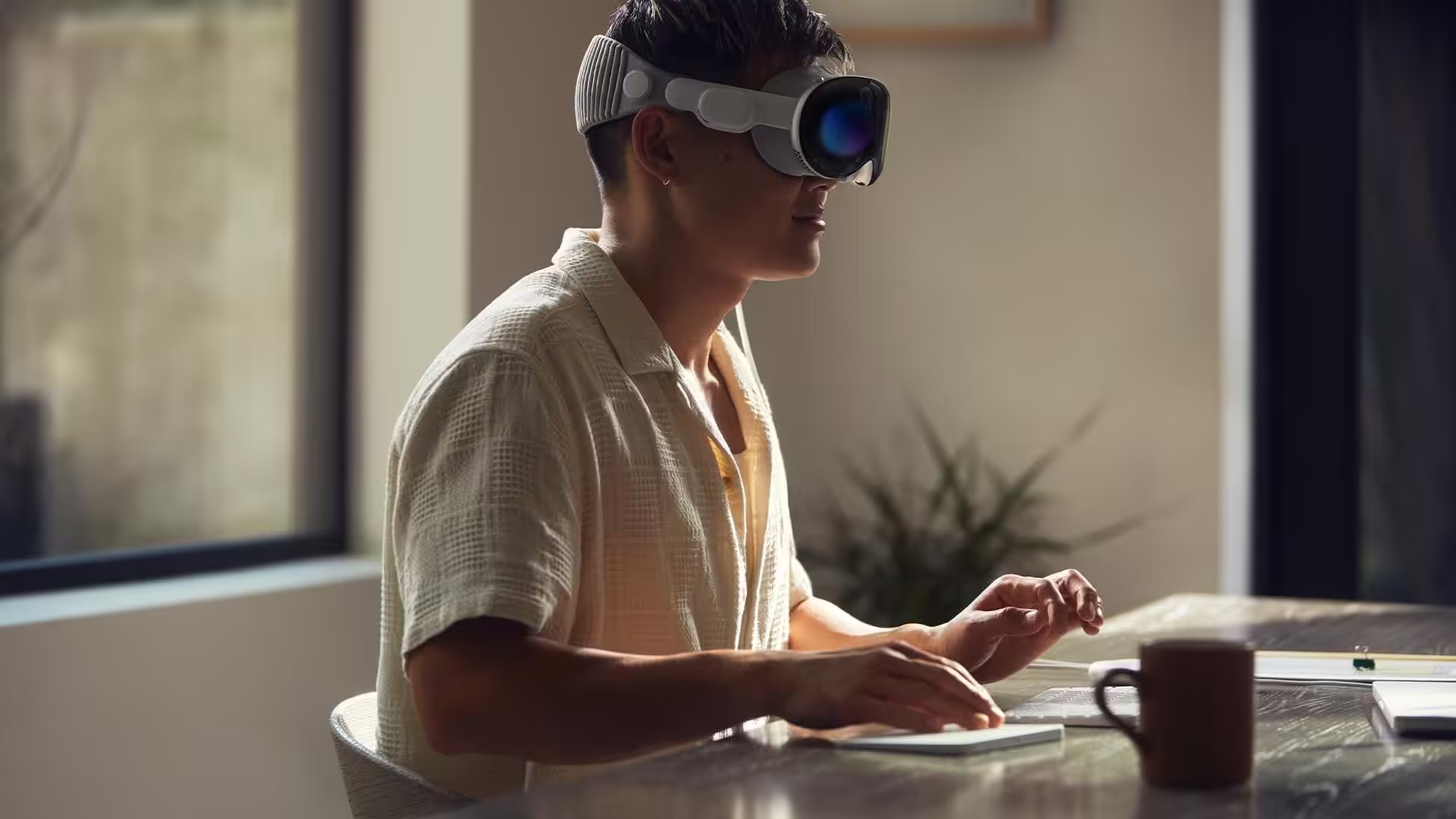
The build quality is outstanding. The Vision Pro feels premium from the moment you hold it. The soft-touch materials, high-resolution displays, and precise fit adjustments speak to Apple’s obsession with detail. It is probably the best-looking headset ever made.
But there’s no escaping the weight. After about 30 to 45 minutes, it feels front-heavy, and I found myself adjusting it constantly. The external battery adds to the awkwardness. Wearing it while walking around or standing feels clumsy. Comfort is a major hurdle for something that wants to be your everyday spatial computer.
Visual Experience: A Window into Tomorrow
This is where the Vision Pro delivers. The display is stunning. It feels like having a cinema screen in your living room. The video passthrough is so sharp you forget you’re looking at a digital feed. Floating apps are clear and vibrant. Spatial video is immersive and engaging.
Yet even this has limits. The field of view is narrower than expected. It still feels like you’re looking through a window, not living inside a digital world. And when you do something simple like reading text for long periods, your eyes get tired fast. The clarity is there, but it is not quite effortless.
Control and Interaction: Magic, Sometimes
The eye and hand tracking is Apple’s best innovation here. You simply look at something and pinch your fingers. When it works, it feels like magic. There are no controllers, and you don’t need to touch anything.
However, that magic is not consistent. In bright environments, hand tracking stutters. In some apps, precision is lacking. It takes effort to get used to, and there are moments when you wish you could just use a keyboard or trackpad. Natural interaction is a promise not yet fully kept.
Software and Ecosystem: Early Days
Apple’s native apps work well, and the operating system feels like an extension of iPadOS. You can use Safari, Notes, Mail, and Photos, all with spatial placement. Watching Apple TV+ on a giant virtual screen is a dream.
But outside Apple’s core ecosystem, things get shaky. Major apps like Netflix and YouTube don’t have native support. Third-party developers are still figuring out how to build for it. Many apps just run as floating 2D windows, making it feel less like a revolution and more like a fancy screen strapped to your face.
Battery Life and Practical Use
Two hours. That is about as long as you can go on a single charge. If you want to use it longer, you’ll need to plug it in and be tethered to a wall. For something meant to be spatial and mobile, that feels like a contradiction.
The Vision Pro is also not very social. Wearing it in a room with others is awkward. The “persona” feature that creates a digital version of your face for video calls is impressive technically, but still sits deep in the uncanny valley.
Final Thoughts: A Product for the Few, Not the Many
The Apple Vision Pro is groundbreaking, no doubt. It is one of the most advanced pieces of consumer technology available today. But it is also a first-generation product with first-generation problems. It is expensive, heavy, and often isolating.
This is not yet the future for everyone. It is the future for developers, artists, or tech enthusiasts who want to explore what comes next. For the average user, it is more of an experiment than a necessity. As technology continues to evolve, those who embrace these innovations may gain a competitive edge in their fields. Meanwhile, the anticipation surrounding the kensington icon to reopen this spring speaks to a broader longing for experiences that merge artistry and technology, showcasing the potential of creativity in the digital age. It’s a reminder that while the cutting-edge may not yet be mainstream, it is shaping the future we are all heading toward.
The Vision Pro is brilliant, but it is not complete. And that makes it exciting and frustrating all at once.