

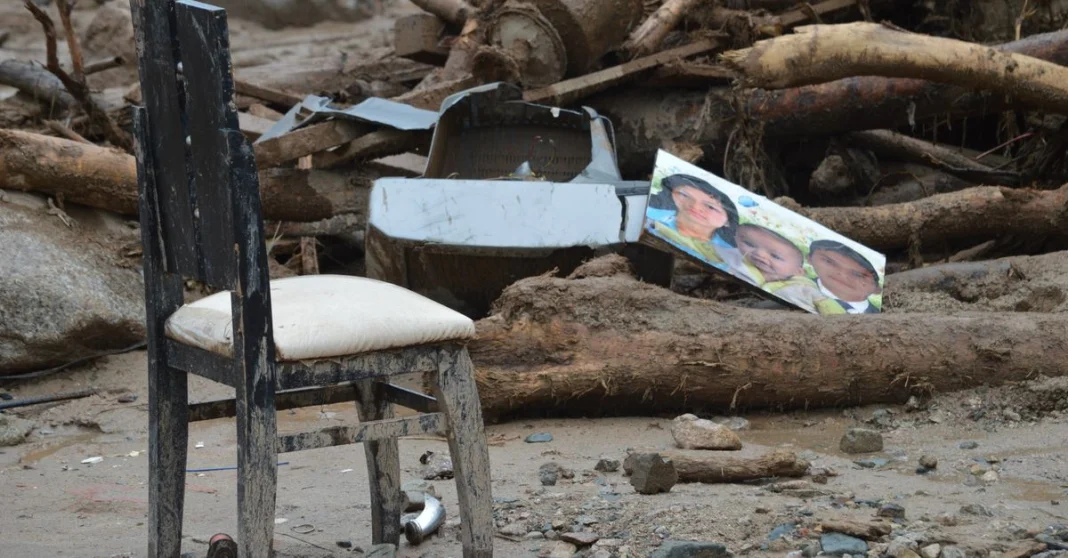
More than 380 dead as remote Himalayan communities remain cut
Australia will provide $5 million in humanitarian aid after catastrophic flooding along the Nepal-China border killed more than 380 people and left more than 900 others unaccounted for.
Foreign Minister Penny Wong and International Development Minister Anne Aly announced the funding on 28 August 2026. World Vision Australia welcomed the package, which is aimed at food, emergency shelter, clean water and sanitation for families stranded by the disaster.
The flood struck on Wednesday morning local time after an avalanche of ice and rock blocked a tributary of the Bhotekoshi River. The blockage then gave way and sent a surge downstream through mountain communities.
Authorities reported that 32 bridges were destroyed and about 40 kilometres of road were lost. Entire villages in Rasuwa and Nuwakot districts were swept away, while damage extended along the Trishuli and Narayani rivers.
Some residents, security personnel and foreign travellers are among those still missing. Communities in the hardest-hit parts of the Himalayas remain difficult to reach because floodwater cut transport links to the same areas that need urgent aid.
Rasuwa and Nuwakot villages swept away
World Vision said children need food, safe shelter and clean water first. The agency also pointed to a second urgent need: routine and psychosocial support for children who saw homes disappear or lost family members.
World Vision Australia chief executive Grant Bayldon said the government funding should help reach remote mountain communities. “Children in these mountain villages went to sleep on Tuesday night with a home, a school and a community. By late morning, there was nothing,” he said.
World Vision described the flood as the second catastrophic event on the same river in 13 months. It linked the repeated danger in Himalayan communities to glacier melt and unstable glacial lakes, which increase the risk of sudden destructive floods.
Bayldon thanked Wong and Aly for moving quickly as survivors wait for help. He said families cut off by the rivers now need food, shelter and clean water before anything else.
World Vision did not give a timeline for when isolated communities would be reached or how much of the Australian funding the charity expects to handle directly. It also did not provide a full district-by-district breakdown of casualties or damage.