

Seven Satellites to Enhance Earth Observation
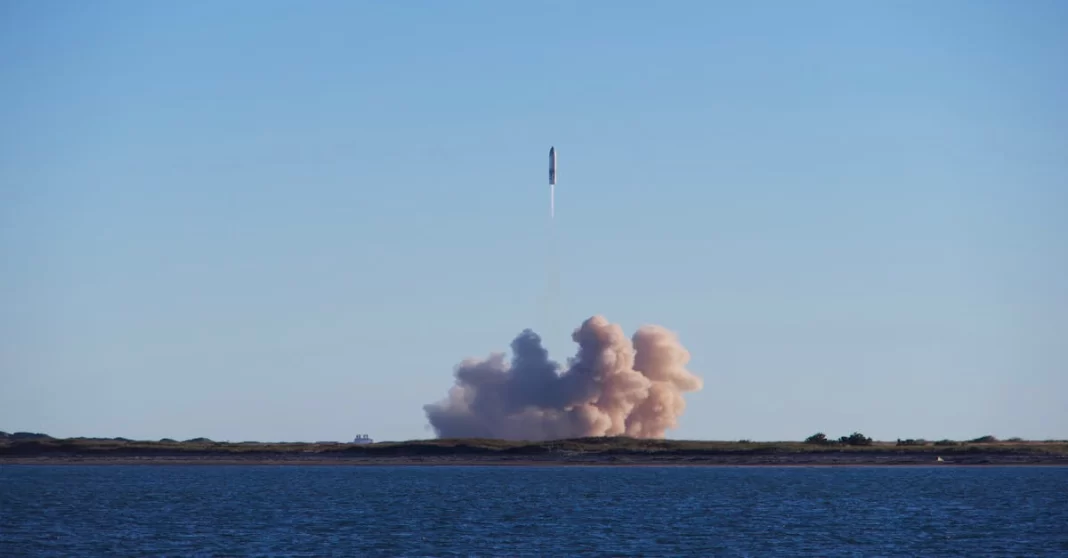
Axelspace Corporation announced the upcoming launch of seven GRUS-3 Earth observation microsatellites, scheduled for no earlier than July 2026. These satellites will be launched from Vandenberg Space Force Base in California, USA, as part of the Transporter-17 rideshare mission managed by Exolaunch, a leader in launch mission management and deployment services.
GRUS-3 microsatellites are designed to enhance Axelspace’s current constellation, expanding their satellite count to more than ten. GRUS-3 will increase the frequency and scope of Earth observation, capturing images at the same location once per day for areas north of 25 degrees latitude. Operating at an altitude of 585 km, the satellites are equipped with an improved spatial resolution of 2.2 metres. They offer a daily image capture capacity of 2.3 million km², effectively covering large sections of the Earth’s surface.
Advanced Imaging Capabilities
GRUS-3 introduces the ‘coastal blue’ spectral band, allowing for the observation of coastal features and underwater environments. This enhancement, alongside existing capabilities, supports applications in environmental monitoring, maritime security, and coastal management. Axelspace’s satellite attitude control technology complements the satellites’ advanced observation capabilities, enabling tasking for on-demand imaging. This feature caters to the growing demand across various industries, including agriculture, forestry, and mapping.
With these capabilities, GRUS-3 aims to provide more rapid and continuous monitoring of changes on Earth’s surface. The satellites will help meet the needs of diverse sectors such as precision agriculture and environmental protection. In addition to acquiring true colour imagery and data for analysing vegetation health, GRUS-3 can also observe shallow coastal features such as seabed topography and seagrass beds. This makes it suitable for a wide range of applications, including map creation and security.
According to Axelspace, by enabling wide-area, high-frequency observation, GRUS-3 allows for more rapid and continuous monitoring of changes on the Earth’s surface. The company is committed to meeting the growing demand for detailed Earth observation data to support a variety of fields, including environment and security, as well as precision agriculture and forest monitoring.
Last updated: 29 June 2026, 12:04 pm

