

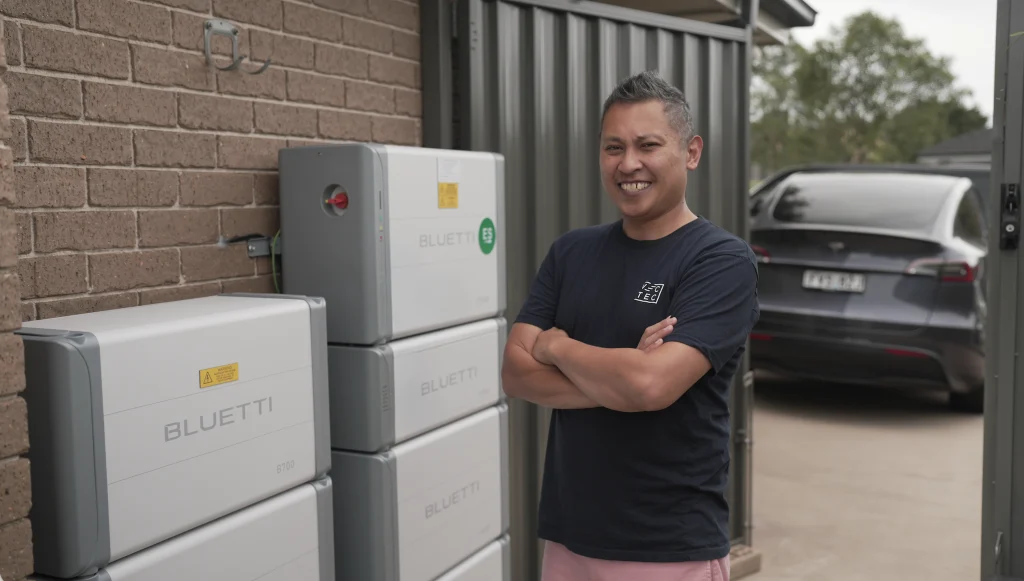
Australia installs home batteries at more than 1,000 a day
Home batteries are helping cut electricity costs in Australia, with benchmark power prices set to fall by up to 7.2% in parts of the country from July 2026.
According to the Australian Energy Regulator’s final determination for 2026-27, rapid growth in household batteries is a key driver of lower wholesale costs. More than 415,000 residential systems have been connected since July 2025, and installers are adding over 1,000 units a day.
New analysis from BLUETTI found that a home battery paired with rooftop solar can power a typical Australian household for as little as $2.25 a day. That is less than the cost of a flat white, a one-way train fare or a loaf of bread.
For some families, the figure marks a sharp change in running costs as peak-time electricity prices rise. More households are also buying batteries after weather-related outages and after a federal rebate cut upfront costs by 30%.
BLUETTI sales surge in 2026
BLUETTI posted 336% revenue growth across its home battery portfolio between January and April 2026. April revenue was more than four times January’s level and 55% higher than in March.
Sales of the EP2000 unit jumped 194%, while revenue from that product climbed 221%. Households buying the systems averaged six to seven add-on battery units per installation, pointing to demand for whole-home backup and energy independence.
Lachlan Wornes, business development manager at BLUETTI, said: “Australians are done with bill shock. The question used to be whether a home battery was worth it – now the question is why you’d wait.”
Demand is rising because many homeowners now see that solar panels alone are not enough. Batteries can store surplus rooftop solar during the day and then supply power in the evening peak, when grid prices are often highest.
Meanwhile, Australia now leads the world in home battery adoption. That shift comes at a pivotal moment for the energy market as regulators link battery growth to falling wholesale costs and lower benchmark bills from July 2026.
Gas-fired power also fell to its lowest level in more than 25 years in the first quarter of 2026. As more homes add storage to rooftop solar, household batteries are becoming a bigger part of how Australia manages demand after sunset.