

Dying cell fragments help SARS-CoV-2 spread and inflame lungs
A COVID-19 study by La Trobe University and WEHI found SARS-CoV-2 can use dying cell fragments to infect immune cells and drive lung inflammation.
The researchers found the virus hides inside apoptotic bodies, known as ApoBDs, which are tiny fragments from dying infected cells. Macrophages then ingest those particles during the body’s clean-up process, giving SARS-CoV-2 a route into immune cells.
The paper appeared in Nature Communications. It helps explain how COVID-19 infects immune cells even when ACE2 receptors do not account for that spread.
Dr Kha Phan and ApoBDs
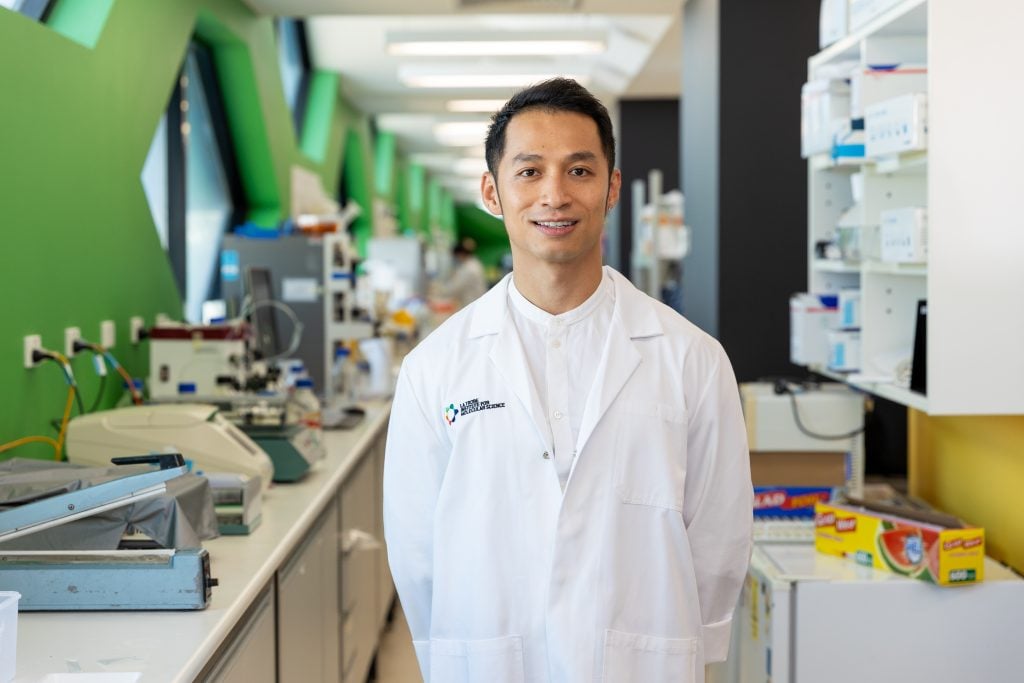
Lead researcher Dr Kha Phan is an NHMRC Emerging Leadership Fellow at the La Trobe Institute for Molecular Science. He said the virus can bypass ACE2 receptors by hiding inside fragments from dying cells.
“Once inside immune cells, COVID-19 moves between cells in disguise, which can spark a powerful inflammatory response leading to severe lung tissue damage,” Dr Phan said.
According to Dr Phan, the pathway does more than spread infection between macrophages. It also triggers harmful inflammation that can damage lung tissue.
The team also tested a way to disrupt that process. Using repurposed drugs based on T-type calcium channel blockers, the researchers reduced lung damage, viral spread and harmful inflammation by blocking formation of virus-infected ApoBDs.
Respiratory viruses including COVID-19, influenza and RSV affect millions of people each year. Those infections remain a major cause of hospitalisation and death worldwide.
Dr Phan said the findings shift how researchers understand viral infection and severe inflammation. He also said similar hidden transmission pathways may exist in influenza and RSV.
Professor Ivan Poon on treatment
Co-senior author Professor Ivan Poon is an NHMRC Chief Investigator in Biochemistry and Chemistry at the La Trobe Institute for Molecular Science. He said the discovery points to a therapeutic approach that could complement existing anti-viral drugs.
“Rather than targeting the SARS-CoV-2 virus directly, we may be able to stop the pathways it uses to spread and trigger harmful inflammation by developing new ApoBD-targeting drugs to interrupt this process,” Professor Poon said.
The study DOI is 10.1038/s41467-026-74363-8. The researchers said understanding the mechanism could support new treatments for severe COVID-19 and other viral outbreaks.