

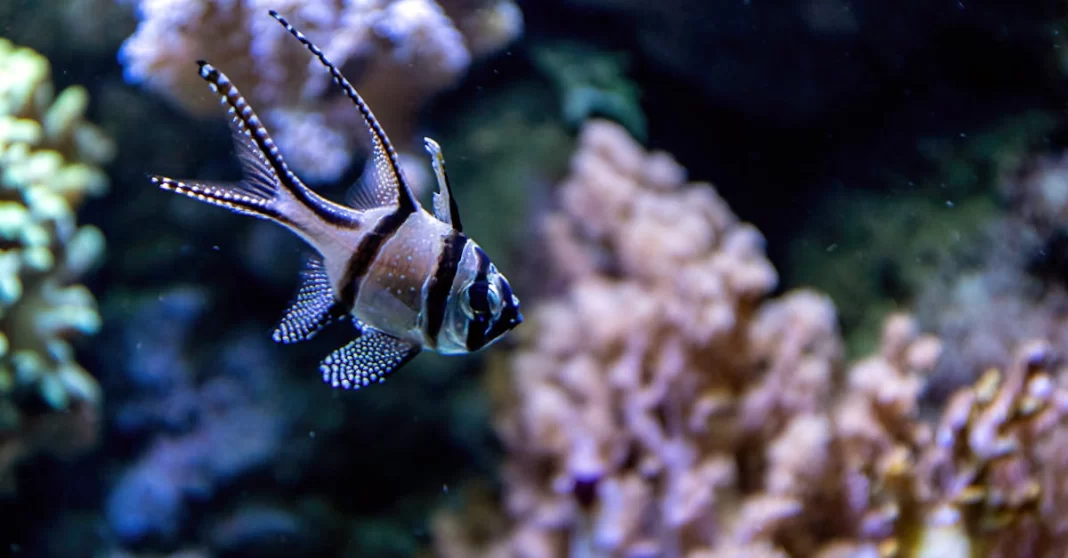
Introduction of Goldenrod and Cinnabar Cleaner Wrasses
Scientists in Australia have discovered two new species of cleaner wrasse, the Goldenrod Cleaner Wrasse and the Cinnabar Cleaner Wrasse, providing fresh insights into coral reef ecosystems.
Living at depths between 40 and 145 metres, the Goldenrod Cleaner Wrasse, known scientifically as Labroides inopinatus, challenges the belief that cleaning stations are confined to shallow reefs.
Named by schoolchildren at the Australian Museum’s Sydney Science Trail, the Cinnabar Cleaner Wrasse, or Labroides flammulatus, features distinctive orange-brown markings.
These cleaner wrasses are crucial in reef ecosystems as they remove parasites and debris from larger fish, essential for maintaining the health and diversity of reef communities.
“Cleaner wrasses are among the most studied fishes on coral reefs. Finding two new species is an exciting moment for science,” said Dr Yi-Kai Tea, Curator of Ichthyology at the Australian Museum.
Revolutionary Techniques Reveal New Species
Through the use of genetics and micro-CT scanning, researchers identified these new species, previously overlooked due to their resemblance to known species.
Dr Peter Cowman, a Principal Scientist at the Queensland Museum, noted that advanced phylogenomic techniques enabled a detailed understanding of these fish’s evolutionary history.
Discovered in areas like the Coral Sea off Queensland, Sagami Bay in Japan, and Boulari Pass in New Caledonia, the Goldenrod Cleaner Wrasse suggests a broad distribution across the Western Pacific.
The Australian Museum’s Type collection now includes the specimens used to describe these new species, allowing for further study and research.
Dr Yi-Kai Tea from the Australian Museum emphasised the ongoing surprises in marine research, pointing out that despite extensive studies, new species continue to emerge, underscoring the value of taxonomic research in understanding biodiversity.
Dr Peter Cowman from Queensland Museum and James Cook University highlighted research collaboration’s strength, explaining that advanced DNA analyses offer deeper insights into coral reef species’ evolutionary history.
Published in the Raffles Bulletin of Zoology, these findings contribute to a broader understanding of how fish species adapt to varying depths and environmental conditions, providing new perspectives on coral reef ecosystems under climate change pressures.
Last updated: 19 May 2026, 5:05 am