

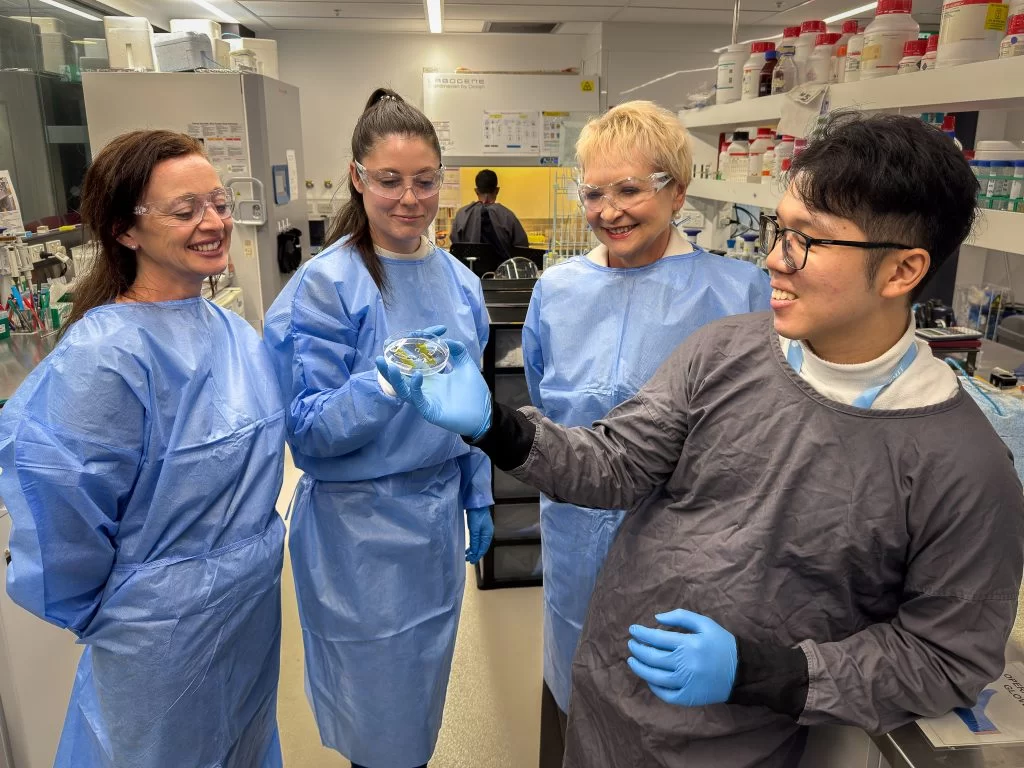
Nanopillars Mechanically Disrupt Virus Particles
Researchers at RMIT University in Melbourne have developed a groundbreaking plastic film that kills viruses on contact. The film features nanopillars that destroy 94% of virus particles within one hour by mechanically rupturing them. This advancement offers a practical solution for reducing disease transmission on high-touch surfaces.
The film works by stretching viruses until they rupture, eliminating the need for chemical disinfectants. It uses affordable, flexible plastic suitable for mass production, making it an excellent option for widespread use. This scalability is vital for settings like hospitals and public spaces where minimizing infection spread is crucial.
Samson Mah, the lead author and PhD candidate at RMIT, highlighted the film’s adaptability to existing manufacturing processes. “As nanofabrication tools get better, our results give a clearer guide to which nanopatterns work best to kill viruses,” he said. The film can be manufactured in large factory rolls similar to cling wrap, making it practical for surfaces like phone screens and hospital equipment.
Testing and Future Research
Laboratory tests confirmed the film’s effectiveness against enveloped viruses, such as the human parainfluenza virus 3 (hPIV-3), which causes bronchiolitis and pneumonia. The nanopillars, spaced 60 nanometers apart, were the most effective configuration, with antiviral properties diminishing as spacing increased.
Further research will explore the film’s efficacy against non-enveloped viruses and its application on curved surfaces. Distinguished Professor Elena Ivanova, a co-author of the study, expressed enthusiasm for collaborating with industry partners to refine the technology for large-scale manufacturing. “Our mould can be adapted to roll-to-roll manufacturing,” she noted, highlighting its potential for broad application.
RMIT’s research team is keen to partner with organisations interested in this project. Their External Affairs and Media department is open for inquiries regarding collaborative efforts to market the technology.
This film offers a compelling alternative to traditional antiviral coatings, which often rely on metal or silicon. By focusing on mechanical rupture instead of chemical methods, the researchers have paved the way for a safer and environmentally friendly solution to reduce virus transmission.

