


Resident Evil combines just enough elements of the games with some Zach Cregger magic to produce one of 2026’s most thrilling moviegoing experiences.
It’s no secret that director and co-screenwriter Zach Cregger is a big fan of the Resident Evil games. Still, it’s almost a miracle he’s been allowed to do see his vision through to the end here, let alone crafting something as thrillingly fun as this, given the recent slew of IP slop. His respect for the source material combined with his mastery over horror is evident from the moment his movie starts because this looks and feels exactly how a video game adaptation should be done.
We immediately follow Bryan (Austin Abrams) making his way through a hospital for his last courier gig of the night. Chaos is erupting around him, yet he’s oblivious to it all because he’s arguing with his girlfriend over the phone but can’t resolve it because he needs to get this mysterious package over to Raccoon City ASAP. The personal and story stakes are set right away; we’re already given a healthy dose of worldbuilding with nary a word of exposition; and the anxiety is spiking mere minutes in. This is basically a body horror-infused version of After Hours.
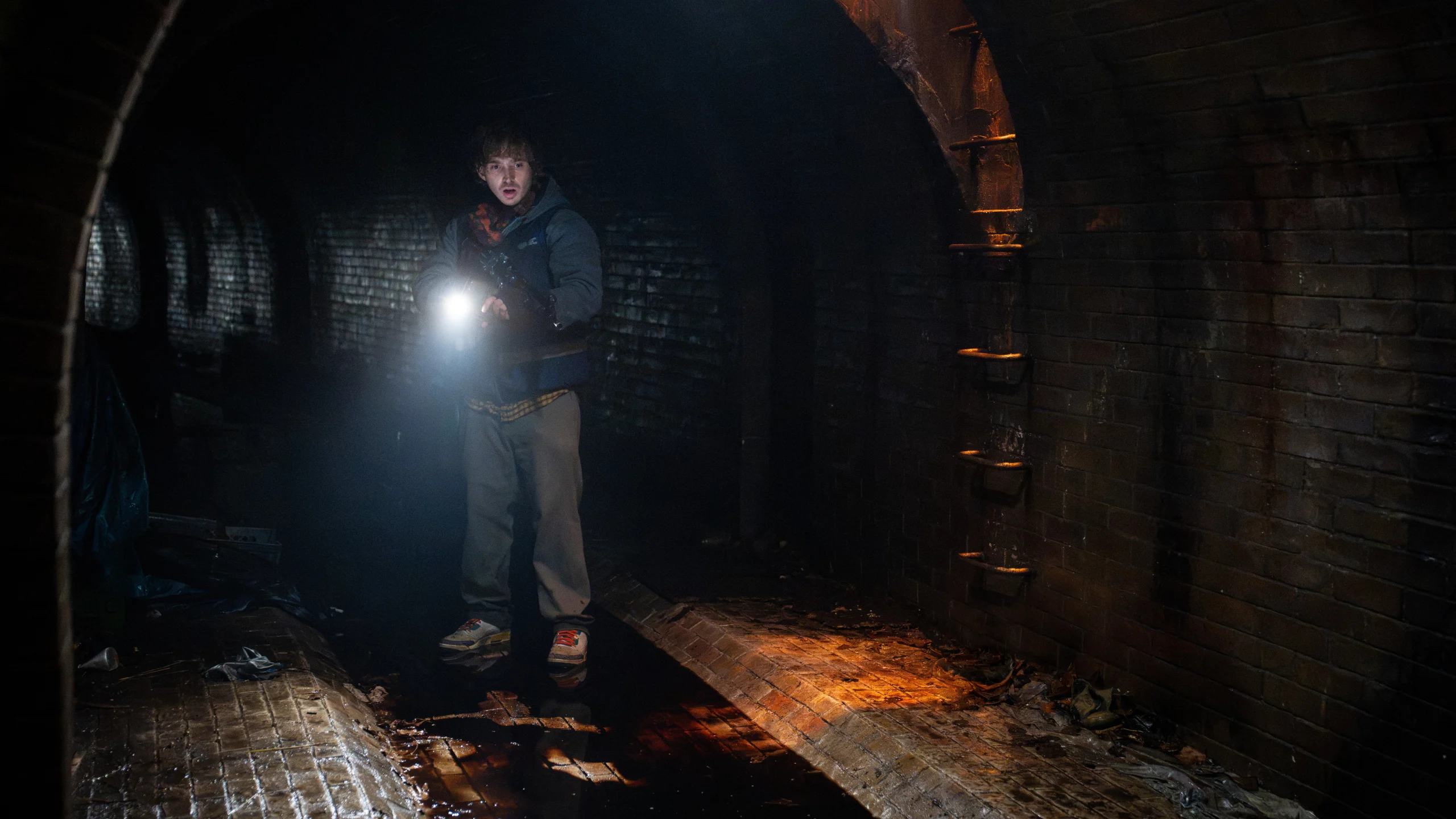
The minimalistic screenplay, which is an original story co-written by Cregger and Shay Hatten, doesn’t bother about lore, ideas, nostalgia, or self-referential pandering to the games (with the exception of one strategically placed health spray bottle). This is Bryan’s story and the movie never loses sight of it, nor does it suffer one bit from the absence of fan favourites like Leon Kennedy or Chris Redfield. Mixing the simmering fear of the unknown in Barbarian with the unbearable tension of Weapons, Cregger keeps Bryan’s unfinished argument with his girlfriend sitting at the forefront of his mind. Having something to lose is a powerful motivator that propels him to miraculously survive, whether it’s from a rabid dog or a horde of zombies flinging themselves at him from the rooftops.
Resident Evil’s attempts at blending theme and action are clunkier than Cregger’s previous movies, with the underlying emotional driver feeling shoehorned in. Where this movie lacks in subtlety, it more than makes up for in structure. The screenplay is cleverly laid out exactly like a Resident Evil game, right down to the locations, giving the movie the relentless propulsion of the games while side-stepping the ‘audience ceding control of the experience’ problem that’s plagued every adaptation yet. By laying out the physical logic in how Bryan gets from A to B, the movie emulates how the Resident Evil games move from location to location while keeping it grounded. In contrast to the coldness of the camerawork in Weapons, the camera is used in several interesting ways to deliver scares and surprises while still maintaining Cregger’s surgical visual precision. It’s like he’s having a blast moving the camera around like he would if he were playing a Resident Evil game.
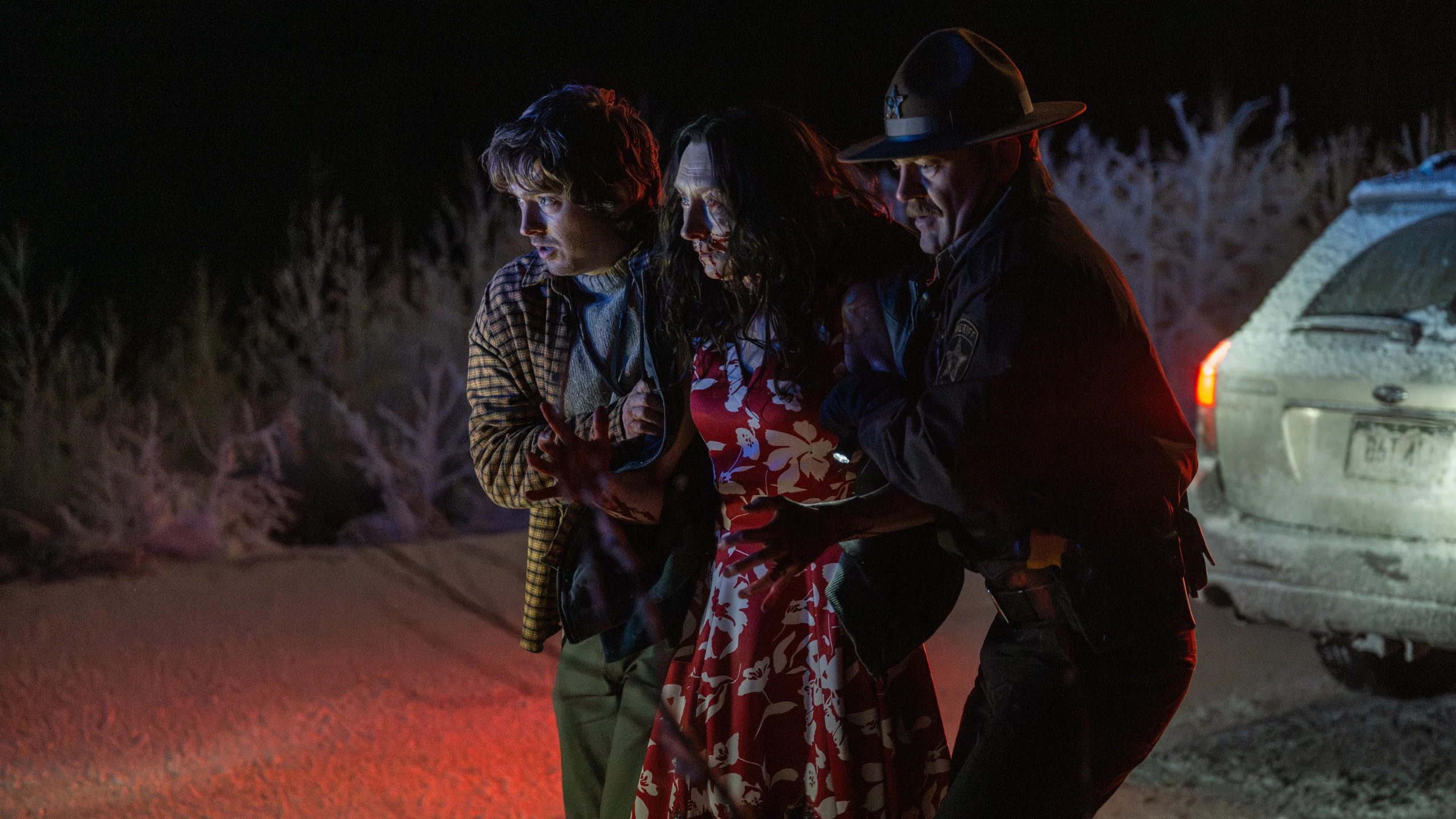
Reinforcing that video game feel is how Cregger never lets the camera leave Bryan’s POV at any point throughout the movie’s lean 90-minute runtime. We’re either tucked up close to his face or over his shoulder in a third-person POV in long takes, mirroring the player perspective of the games (particularly Resident Evil 2 and 4, both of which are inspirations for this movie). Instead of us controlling Bryan as we would a video game character, we’re at the mercy of Cregger controlling us (and Bryan). When the POV shots unexpectedly change from third-person to first-person, Bryan’s heavy breathing feels like it’s right next to our ear as his (and our) view darts from one corner to the next, all while the stripped-down score gets louder and faster. The scares are great, but it’s these tension-building moments that are the most effective.
Ironically, it is the way Cregger gets the audience to cede control that makes Resident Evil work so well.
Cregger repeatedly plays the audience like a fiddle by visually setting up the puzzle pieces of every major sequence, only to solve it in ways we didn’t expect. Take one particularly tense sequence where Bryan goes from his car to another car before ending up at a farm. Cregger keeps at least two of these physical ‘checkpoints’ visible in the same shot, one up close and one in the background, almost the entire time. The whole solution was there in front of us, yet the pay-off is still surprising. When we reach a crucial midpoint scene (which will remain vague to avoid spoilers), Cregger upends all the expected horror tropes in such a surprising way that it not only elevates what he is trying to do with Resident Evil, but it resets the stakes for the second half of the movie.
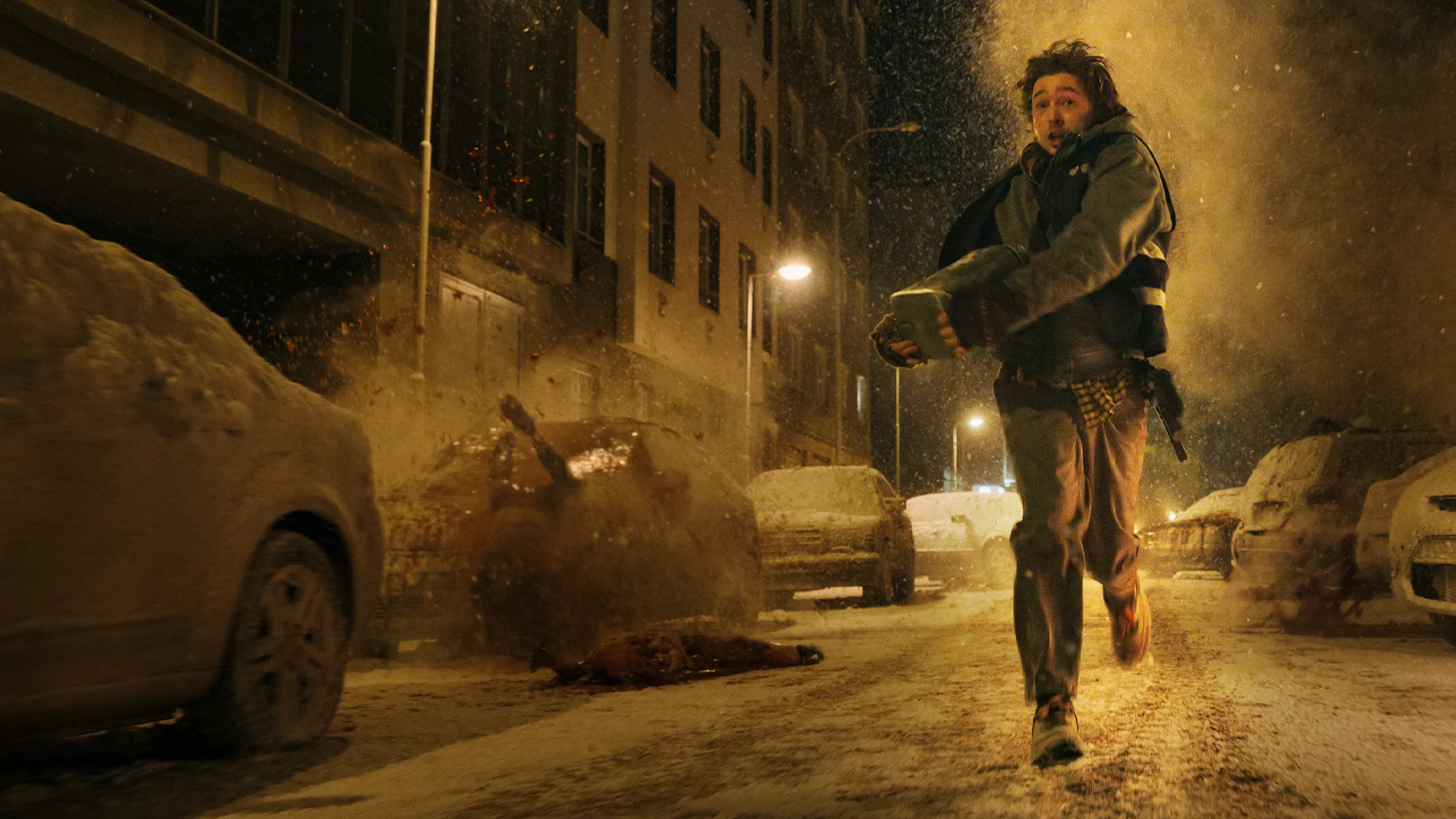
The final piece of what makes Resident Evil work is the much-needed humanity Abrams brings because this movie lives or dies on his character. From forging a signature to finish a job to checking up on the zombie he hits with his car (despite all of us screaming at the screen not to do so), he’s a simple everyman trying to do his best, whether it’s being a decent courier or showing care to others. Abrams blurs the line between audience surrogate and player character so convincingly that we forgive him during his worst moments, like his utter incompetence with using guns or falling from a ledge despite literally having a ladder in his hands moments earlier. He’s not a trained operative, so he’s only doing the best he can. Plus it’s not like we’ll do any better in his position.
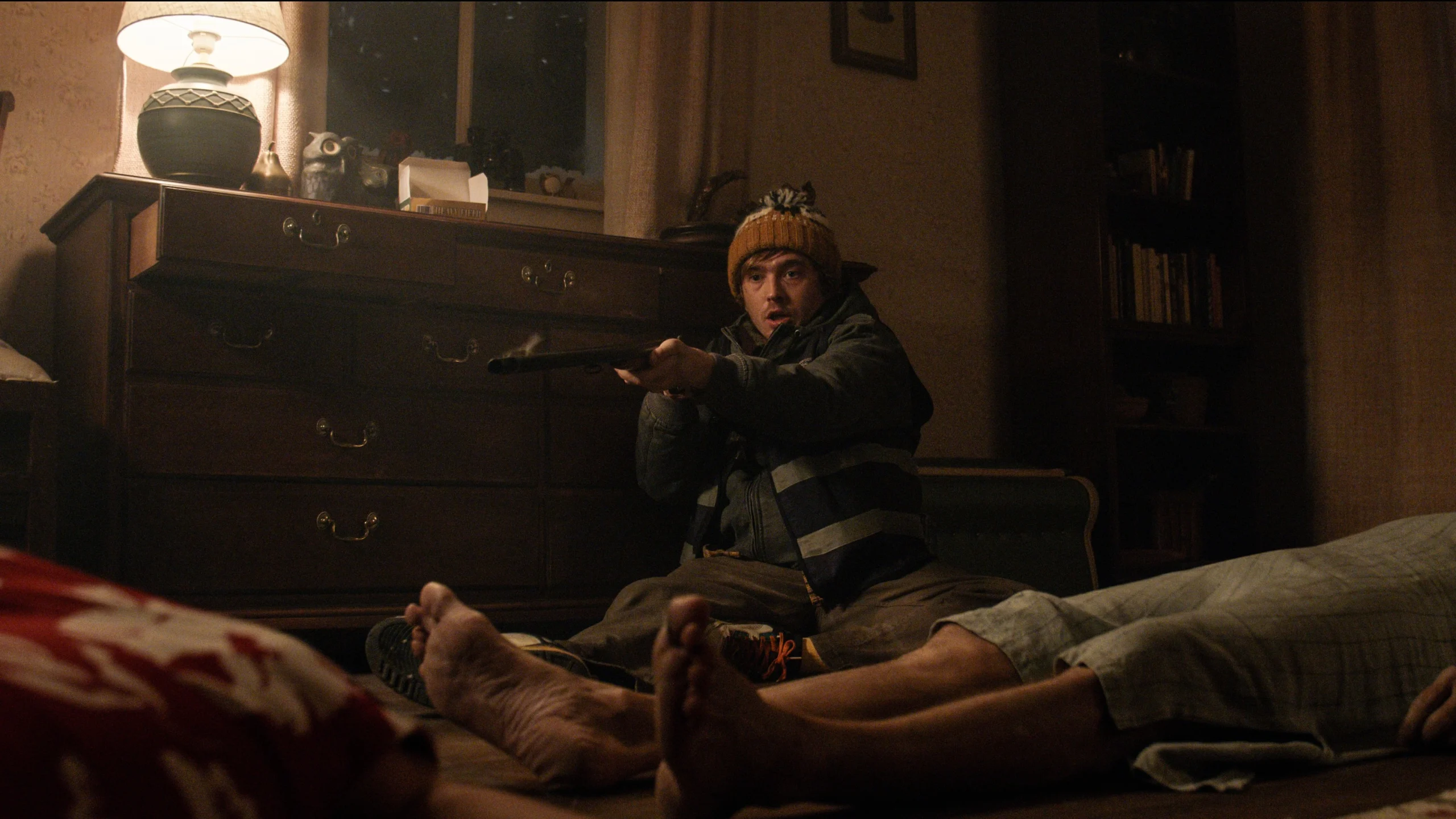
For all the impressive special effects and set pieces jammed into Resident Evil, some of the best moments are the little character moments from Bryan. When he’s not repeating variations of the same two swear words while in the midst of being chased, he’s missing easy shots and yelling “I suck at guns!” at himself. This is a surprisingly funny movie where we’re always laughing with or relating to him in some way, all of which helps release any excessive build-up of tension before settling back into a panic-inducing rhythm. This in turn leads to the clever visual representation of what its like to play the game. When Bryan finds a gun, he swears in jubilation only to realise it’s empty. He swears (again) before looking through the drawers for bullets. He finds some bullets and then sees a phone which he can use to make an all important phone call (and swears again). For those who have played the games, stuff like this captures the vibe perfectly. For those who couldn’t care less about the games, it functions great as a small piece of character development from a competency point of view.
After a propulsive first two acts, Resident Evil does stumble in the final act as Cregger unexpectedly falls back on conventional tropes instead of pushing forward with his subversive horror. The video game-esque camera work switches to regular mid-shots and wide angles, while the scares feel less imaginative even if they’re thematically relevant. This is the one moment where the IP shackles are most obviously felt, almost as if the powers that be were ushering Cregger to get things back on a more ‘normal’ track. In an alternative universe somewhere, there’s a version of this movie where the conclusion carries forward the momentum built up by its first two acts until the very end, gonzo gory horror and grim humour all intact. But alas, we’re left with something that’s satisfying, complete with an incredible final title drop, but it does feel like a slight missed opportunity.
Any quibbles I have with Resident Evil are minor when taking the movie in as a whole because this is one of the most fun watching experiences of the year. By taking his usual subversive approach towards horror and applying it to a video game, Zach Cregger has shown us the blueprint on how to properly make a great adaptation that isn’t beholden to fan expectations or the source material. He had no right to make an IP-driven movie this entertaining, but even if you strip away the Resident Evil of it all, this is still a fantastic movie. Perhaps that’s the trick to a video game movie adaptation: just make sure it’s good and everything else will take care of itself.