


Weighty in thematic depth and zombie thrills, 28 Years Later: The Bone Temple is a worthy sequel that’s hums in harmony with its predecessor.
Some big spoilers ahead for this 28 Years Later: The Bone Temple and its predecessor. It’s a (soon-to-be) trilogy, so of course there will be spoilers.
As much as I loved 28 Years Later and all that director Danny Boyle and screenwriter Alex Garland put into it, I’m glad that Nia DaCosta took the reins for The Bone Temple. She picks up what her predecessor and Garland laid down and (zombie) sprints away with it. This is a gnarly sequel in every single way possible – and I mean that as a compliment.
Our previous protagonist, Spike (Alfie Williams), has been ‘rescued’ by Sir Lord Jimmy Crystal (Jack O’Connell) at the end of 28 Years Later, but any hint of jolly good adventures with this purple tracksuit-wearing weirdo is shattered as he’s quickly thrown into a humiliating trial by combat with one of Jimmy’s blonde wig-wearing henchmen – all of whom are named Jimmy. As the camera stealthily pans across their battleground (i.e. an empty pool), the henchman taunts Spike at every opportunity… until overconfidence results in his pants being pulled down and a knife stuck into his femoral artery.
In just a few minutes, you immediately know that this sequel is a different beast from its predecessor.
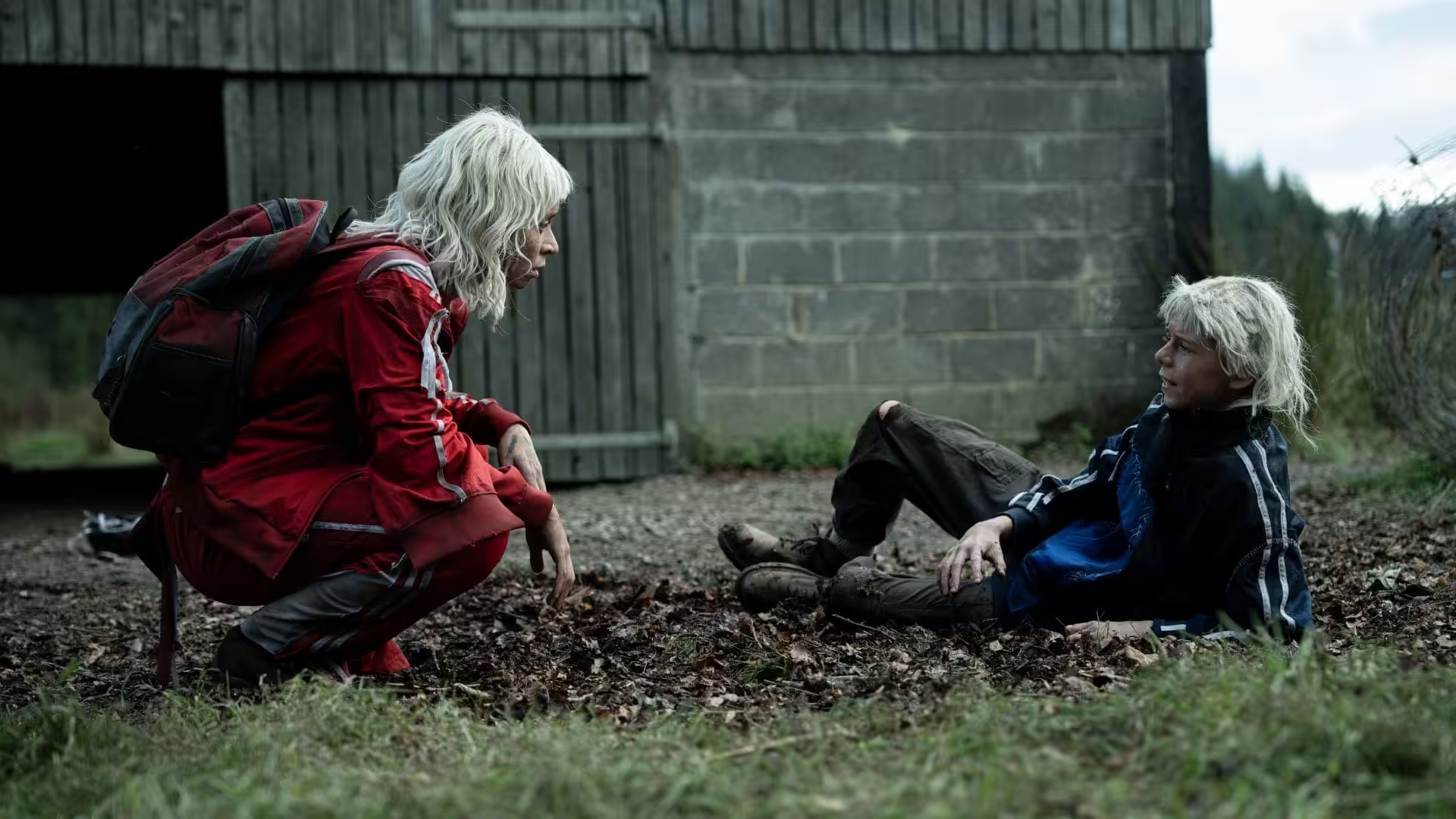
By killing the henchman out of self-defence, Spike is baptised into Jimmy Crystal’s cult of psychotic murderers. This is far more terrifying than having zombies Rage virus-affected people chasing you down. You know what to expect from the Rage virus. You have no idea how depraved Jimmy Crystal is, even when the Jimmy cult tortures some innocent farmers through ritualistic skin peeling and fights to the death with pseudo-Christian talking points thrown in as a stomach-churning garnish. The limits to this guy’s evil are simply impossible to pin down.
While the ‘zombie’ scenes are filled with conventional quick cuts and fast shots, DaCosta scrutinises people with lingering holds. Whether it’s a conversation or the aforementioned torture sequence, every expression and inch of skin being peeled off is shown in unsettling detail. Boyle would’ve made a great version of this movie, but I honestly don’t think he’d make the choices DaCosta did because he’s such an empathetic director who manages to find humanity in the worst of people and situations.
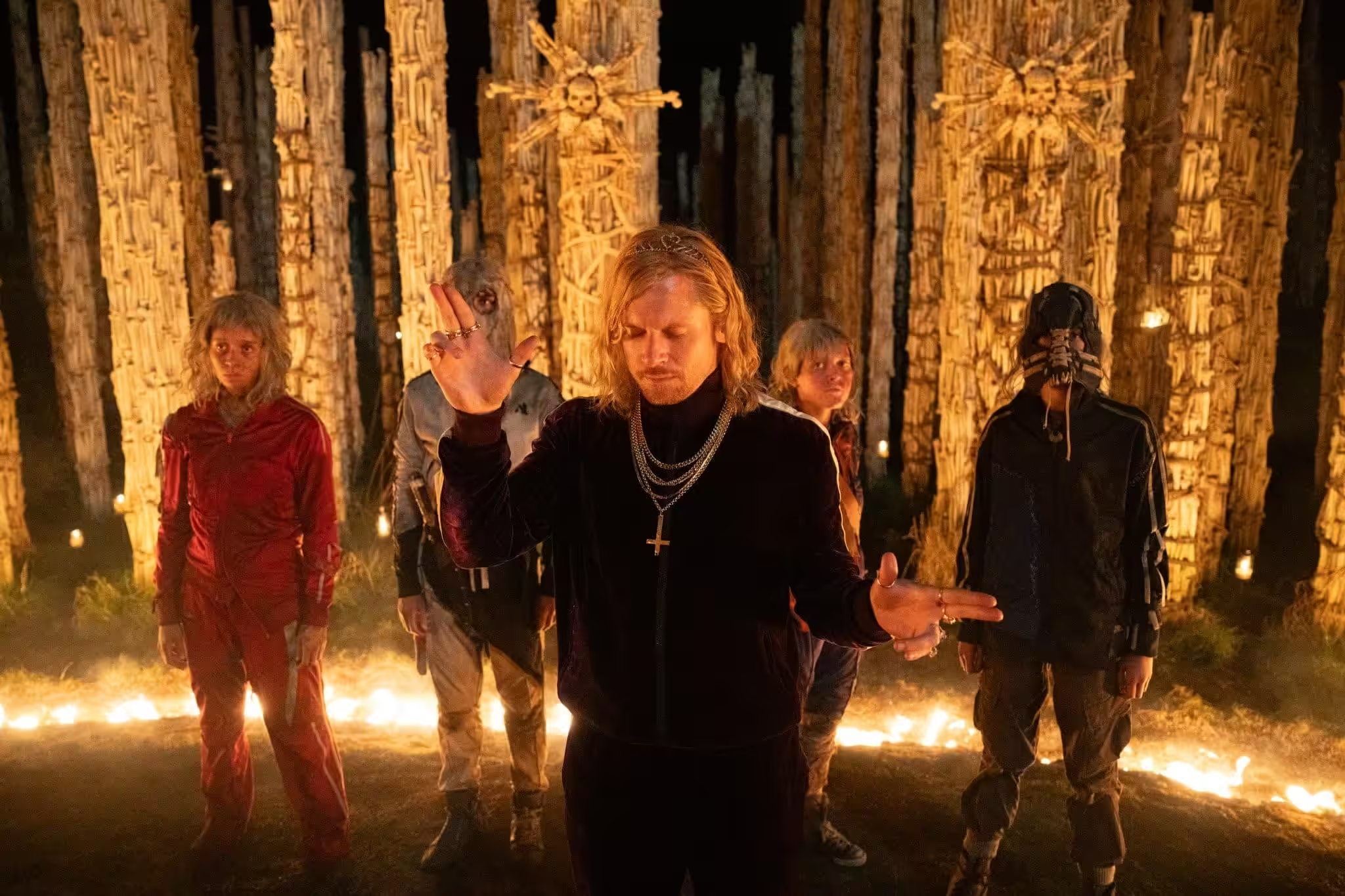
If 28 Years Later was an elegiac contemplation about death, The Bone Temple spits on the graves of the dead by exploring what terrifying nightmare is left if our link to humanity was completely severed, whether it’s forced or voluntary. O’Connell plays Jimmy Crystal with such a lack of empathy that it’s genuinely unsettling. As this Jimmy Savile-inspired maniac spouts contradictory Christian rhetoric while inflicting pain – both physical and psychological – onto others, I immediately thought of Heath Ledger’s Joker. Both are devoid of any humanity and are nothing more than chaos agents who hide behind a literal purple façade. If there were a God, he definitely wouldn’t be wearing tracksuit pants.
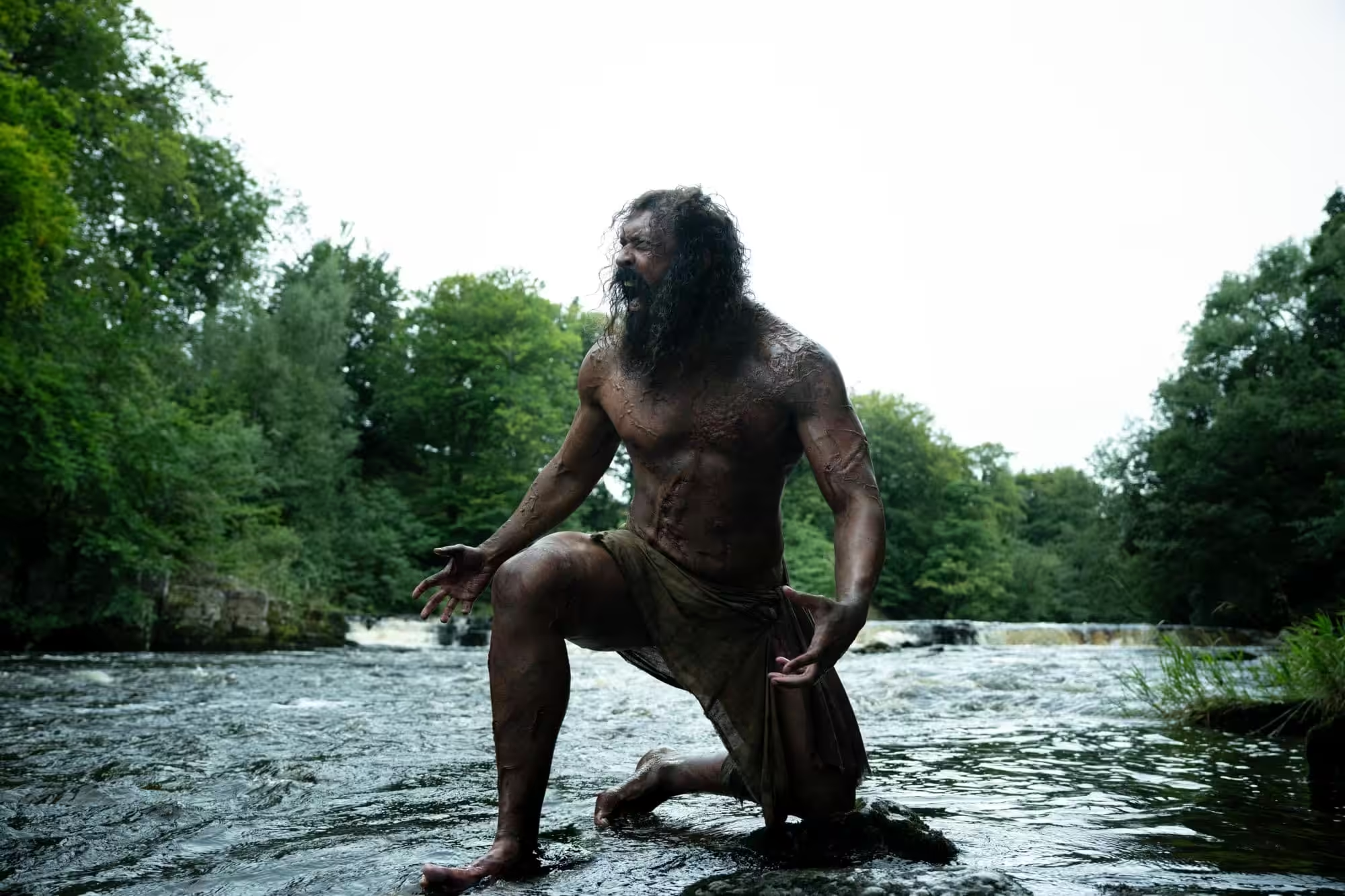
That’s not to say DaCosta is all about the gore and torture porn. As subversively terrifying this movie is, she tethers The Bone Temple to some much-needed morality via Dr. Ian Kelson (Ralph Fiennes) and his relationship with Alpha Rage-induced human Samson (Chi Lewis-Parry). Having both played supporting parts in 28 Years Later, Dr. Kelson and Samson are crucial in providing this movie some catharsis that the utterly unsympathetic Jimmy Crystal character arc is unable to provide.
As Dr. Kelson and Samson form a strange yet wholesome bond – aided by copious amounts of morphine shot – an unfamiliar feeling of hope begins to settle in. The scenes of Dr. Kelson and Samson dancing hand-in-hand may well be the most heartwarming thing we’ll witness in 2026. As mid-shots become lingering close-ups, it’s almost like the lucidity is returning to Samson’s eyes right before us. Could there in fact be a way to un-turn Samson after all?
This moment of tranquility is shattered when Jimmy Crystal finds the good doctor’s literal bone temple and makes an unexpected appointment. The tension is palpable as the pair try to figure the other person out. There are several funny lines, but I found myself laughing out loud as a way to release all the tension I’ve been unexpectedly holding the whole time. This is a constant thing throughout The Bone Temple and an example of why Alex Garland’s screenwriting is S-tier. Laughter is a much-needed relief valve and it comes at moments you simply don’t expect.
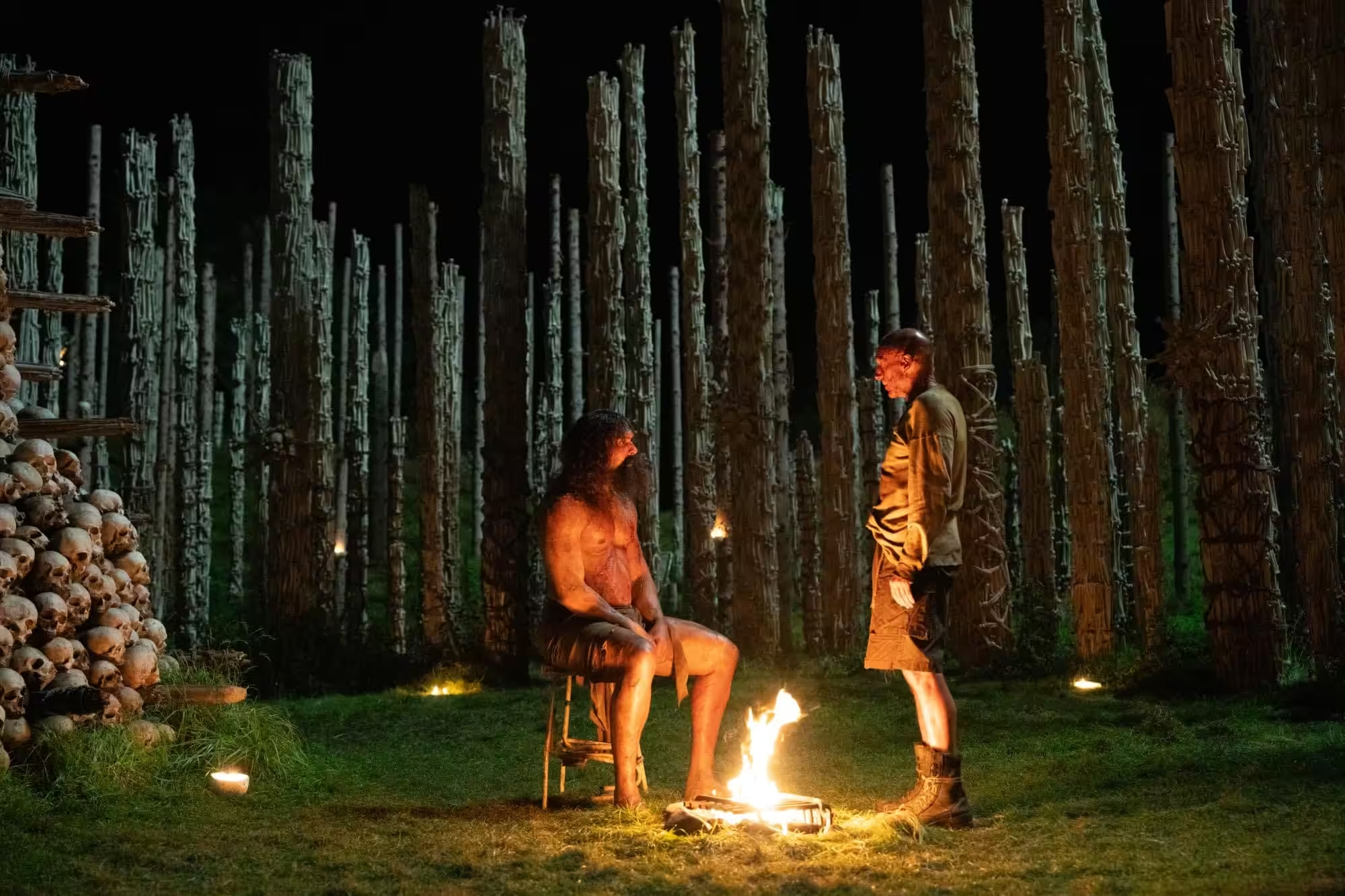
It’s obvious from the beginning that Jimmy Crystal is a grifter. We just didn’t know how much of one he is. Garland sprinkles in some classic ‘childhood trauma’ stuff (which we saw in 28 Years Later), but doesn’t let Jimmy off the hook or have it ‘explain’ his behaviour. His whole persona and co-opting of Christianity is just a way to keep his cult going. The good doctor is a mere scapegoat to further perpetuate the Biblical myth he’s trying to craft. This is just a guy who is evil, plain and simple, and he’s bought into his own con so deeply that even he believes it to a certain extent.
I did not expect this criticism of Christianity and it feels very timely given the rise of religious grifters in recent years. DaCosta’s unsparing examination of this idea is weighty and another fantastic choice she makes that I don’t think Boyle would’ve, especially given his devout Irish Catholic background (though now lapsed).
As the movie barrels towards its deranged finale involving fire and (bone) ash, the various thematic and story tendrils bring us back full circle in a bittersweet, black-mirror kind of way. If 28 Years Later ends on an unexpectedly positive note, The Bone Temple gives us some catharsis that’s lacking in ultimate redemption. This is a feature, not a bug. As much as we think triumphing over evil will be satisfying, it is only ever a fleeting feeling because of the sacrifice needed to win.
Much like its predecessor, The Bone Temple could’ve ended five minutes earlier and it would’ve been a sensational and subversive movie. But because it had to tie back into the Cillian Murphy of it all in a Marvel-esque way, the ending rubs up against all the brilliant work DaCosta has done in making this sequel stand on its own.
The Bone Temple is a brutal inversion of its predecessor’s ideas while operating at new levels of visceral horror. Nia DaCosta has taken the baton and created something masterful that further elevates the zombie genre. With the final movie of this 28 Years Later trilogy confirmed, Boyle taking back the directing reins, Garland writing the script, and presumably Cillian Murphy having an even bigger role, I can’t be more excited to see how they wrap this trilogy up.