


Decked out in envious designer clothing, a cast who are having the time of their lives, and a surprisingly mindful commentary about the media industry, The Devil Wears Prada 2 is a crowd-pleasing time that doesn’t disappoint.
‘On Repeat’ is an ongoing column where I dive into films I watch repeatedly and explore just why they stick in my brain and refuse to go away.
Is The Devil Wears Prada an underrated ‘Trojan Horse’ movie for the ages?
You can watch The Devil Wears Prada as an entertaining rom-com and come out of it thoroughly satisfied. You can watch it as a depiction of the difficulty in sustaining healthy relationships while pursuing a career you love. Or you can watch it as a critique of how toxic the fashion and journalism industries are. Having watched this movie several times in my teens, 20s, and now 30s, it still astounds me how deftly it operates on several different levels without calling attention to itself.
What struck me on this latest rewatch is how the movie’s aspirational, heels-wearing gloss hides an incredibly bittersweet experience. While everyone looks and dresses like, well, Hollywood, there’s not a single character whom you can honestly say, ‘yeah, I want to be just like them’.
Let’s start with the titular Prada-wearing devil. Miranda Priestly is one of the leading figures in the popularisation of the whole ‘girlboss’ thing, but she absolutely sucks. Don’t get me wrong, the whole point is that she’s supposed to suck, but Miranda in the hands of anyone other than Meryl Streep would’ve come across as toxicity personified instead of deeply flawed yet human.
The magazine and fashion industries are incredibly difficult to leave one’s mark, especially if you’re a woman at the top back in 2006. That’s perhaps why the only real notable figure from those worlds whom people know about is Anna Wintour. There’s a cost in being a woman at the top of the magazine and fashion world, and Miranda is ultimately a victim of her success. We see her family pop up from time to time, but it’s clear that her true love is Runway magazine. Her steely persona is a defence mechanism rather than a feature of the person, so it’s no wonder why she’s seemingly incapable of behaving like an actual person.

This is definitely not an endorsement of anything Miranda says and does (except for the cerulean speech). She definitely didn’t need to be such an awful demon to her assistants and deserved to be reported to HR, but I do understand her worldview and why she is who she is. But would I ever want to be in her position (regardless of gender)? Definitely not. That’s not a healthy way to live one’s life, even if it’s a life of excess and success in equal measure.
Running in parallel to Miranda’s first-world problem struggles is Andy’s own journey, which is where things become somewhat more fantastical, though no less relatable. Okay, it’s a bit hard to believe that Andy managed to land anywhere at Runway because her interview was utterly horrible. Seriously, who doesn’t research their potential place of employment?
But her whole ‘means to an end’ mentality? That really clicks.
Journalism is a tough world to crack, even back in 2006 when there were still budgets to pay for good writing and outlets still hiring aspiring writers. Watching Andy do what she can to just get a foot in the door really struck a chord because, well, every aspiring journalist/writer has done something akin to what she did in the single-minded pursuit of their passion.
While there are only fleeting references to Andy’s passion for writing and journalism, I really enjoyed how The Devil Wears Prada highlights her resourcefulness in areas unrelated to cobbling sentences together, such as the whole Harry Potter novel subplot. It definitely goes quite a way it shading Andy as more than an audience surrogate and ‘ideas conveyor’.
Having said that, using a newbie like Andy to critique the fashion industry is a great move. When Nigel shames her for being a size 6, it doubles as a character moment for both and as a way of saying, ‘how messed up is the fashion industry?’ No one would ever call Anne Hathaway fat by any stretch of the imagination, and The Devil Wears Prada making fun of these viewpoints way back in 2006 is quite prescient to the more inclusive approach that clothing brands have adopted in recent years. Still plenty of work to be done, of course, but one step at a time.
All this is to say that Andy’s path may seem quite appealing initially — Great clothes! Parties! Paris! — it’s also not one that’s sustainable for the long run, which is why she ultimately lasts less than a year at Runway. Both Andy and Miranda represent the ‘before’ and ‘after’ of this particular journey the big question is whether you stay the course or veer off it.

The passage of time has even made Nate (Adrian Grenier) and his pretentious attitude about Andy’s career choices go down easier. Having witnessed how often incompetent — and often awful — men inexplicably fail upwards in the decades since The Devil Wears Prada was released, Nate comes off as somewhat reasonable. Don’t get me wrong, he is incredibly annoying, but this jerkass has some valid points. His concern about Andy kowtowing to a horrible boss for a career she doesn’t even want and how her passion for writing has been pushed to the wayside makes a lot of sense.
The main issue is that Nate just sucks at communicating his arguments across properly, and with Andy’s life so subsumed by Miranda’s whims, it makes sense why he was so seemingly unsupportive of her. That’s not to say what he said was correct, or that Andy is completely innocent either. But I do get where both are coming from. Neither were being completely honest with each other, or themselves, and both sucked at communicating their problems, so it’s not a surprise they broke up. Having been in both Andy and Nate’s positions to varying degrees, their relationship rings truer to real life than it initially seemed. It’s not just me saying this, Anne Hathaway herself is on the same page too.
Christian Thompson (Simon Baker) though? He’s just a sleazy creep through and through, nothing more needs to be said.
Last but certainly not least are Nigel (Stanley Tucci) and Emily (Emily Blunt), as both are kind of the halfway points between Andy and Miranda. Nigel is the classic lifer who clings to Miranda’s mink coattails in the desperate hope that things will be better, even though we all know it’s unlikely. Sometimes delusion is all we’re left with, and looking beyond that could shatter everything, so we make do. That doesn’t sound like a particularly fulfilling life.
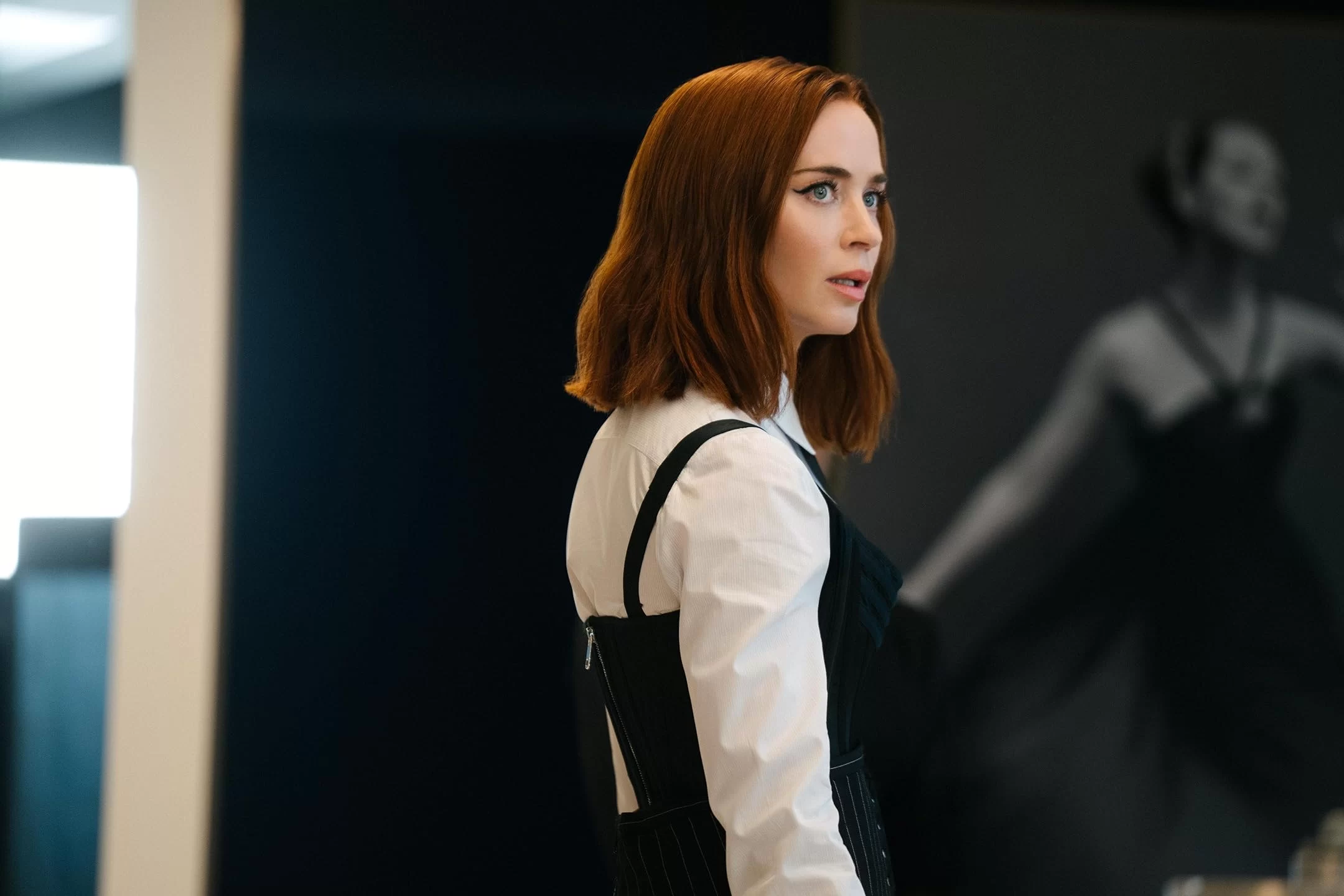
As for Emily, well, she’s basically that horrible colleague who is nasty for no real reason. I hazard a guess that everyone has met that one person who simply hates you for no real reason, and Emily is basically that in a nutshell. She’s portrayed as quite shallow and materialistic, yet we also don’t know what drives her. One could argue that being Miranda’s assistant caused her to be such an awful person, but that doesn’t excuse her behaviour. To be fair, the script doesn’t really give the character much dimension beyond wanting to stick with Runway for all the glitz, glamour, and clothes. The fact that Blunt manages to make such a meal of the role speaks well to her talent because Emily is simply an awful person to be around, let alone wanting to be her.
The Devil Wears Prada truly was a movie of its time, and it captures such a clean snapshot of all the characters in a very specific, formative moment of their lives. Will the sequel live up to the hype? Was there even any need for the sequel given how this movie concluded so neatly? Well, whatever happens with The Devil Wears Prada 2, we’ll always have the first movie to fall back on.