

The Sound of Music, The Wizard of Oz, Legally Blonde, Mamma Mia and Once. I have produced all of them, and in 2027 I will add The Addams Family to that list. There is clearly a pattern, and I am completely comfortable with it.
They are all stories audiences already know. You may have watched the movie, known the songs or grown up with the characters. In some cases, you probably know exactly how the story ends before you buy a ticket, and I think that’s ok.
In fact, I think the theatre industry can sometimes become a little too obsessed with the idea that audiences should always be discovering something new. New work absolutely matters, but familiarity is not the enemy. Sometimes the thing that actually gets somebody off the couch and into a theatre is a story they already love.
That matters more now because the way we consume entertainment has changed dramatically. I stream far more films than I see in a cinema, and most people I know do the same. We have endless choices at home, enormous televisions, surround sound and every streaming platform imaginable. On the rare occasion I do go to the cinema, I am often sitting among a lot of empty seats.
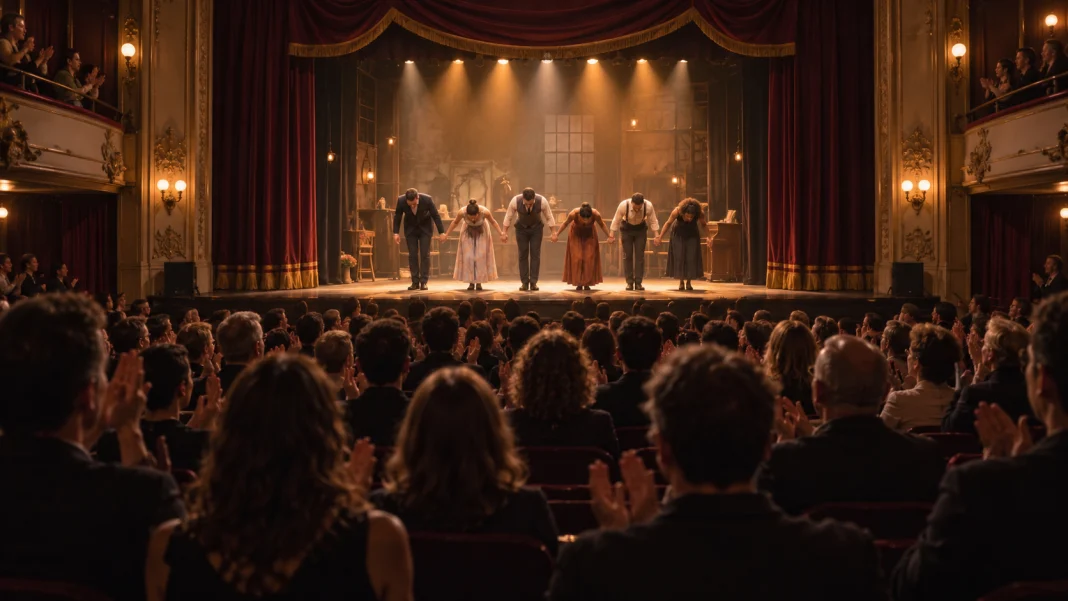
Theatre feels completely different. There is something about walking into a full room that immediately changes the experience. Hundreds of people laugh at the same moment, going quiet together, reacting together and applauding together. Sometimes you can actually feel an audience shift during a performance and that collective response is something you simply cannot recreate in your lounge room.
That is one of the main reasons I like producing familiar stories. But it’s not simply about giving people the movie again. If that is all you are doing they may as well stay home and watch it. The challenge is to take something they think they know and make it feel fresh again.
You may have watched The Sound of Music twenty times, but you have never watched this particular cast perform it in this particular theatre with this particular audience. You may know every ABBA song in Mamma Mia, but hearing those songs surrounded by hundreds of other people is completely different to playing them in the car.
Once is a good example at the other end of the scale. It is quieter and more intimate, but the connection between the performers and the audience is still what gives it life. The room becomes part of the storytelling.
That is what theatre can do at its best. It can make something familiar feel personal again.
But not every movie should become a musical. Some absolutely should not. I’ve got a list, but I probably shouldn’t share it (I will leave you to make your own list). Familiarity does not automatically make a show good, and a famous title definitely does not excuse lazy theatre. Familiarity can be an invitation, and I don’t think we should be uncomfortable about using it.
There is also a practical reason I approach theatre this way. I am a self-funded independent theatre producer, and I want to keep doing that. That means I need to sell tickets. I’m not ashamed of that.
Ticket sales are how I raise the money to pay performers, musicians, creatives, technicians, venues and everyone else involved in putting a show on stage. There is no magical pool of money that appears because we have decided to make something artistically worthwhile. People have to buy tickets.
I’ve seen people tie themselves in knots over this. We want performers to be paid. We want better sets, costumes, sound and lighting. We want longer seasons, more jobs and more ambitious work. Then, in the next breath, we can become strangely suspicious of anything that might actually attract a large audience. I don’t understand that.
Popularity and quality are not opposites. Commercial thinking and artistic ambition are not opposites either. In independent theatre, they need each other.
I want to make really good theatre, and I want the theatre full. If a recognisable story helps somebody decide to spend their money on a night at the theatre, great. Once they are in the room, it is our responsibility to make the experience worth their time and their money.
And if that production succeeds, it pays people. It creates jobs. It gives me the confidence and capacity to take the next risk. It allows another production worth of people to be employed and another show to exist.
New work matters. Smaller work matters. Risky work matters. Theatre needs all of it, and I would never argue otherwise. But I think we should stop treating audience appeal as though it somehow contaminates the art.
There is real value in taking a story people already love and giving them a reason to experience it together. There is nothing lesser about an audience buying a ticket because they loved the movie, know the songs or remember the characters from childhood.
If that familiarity gets them through the door, then theatre gets the chance to do what it does best. Take something they thought they knew and make it feel completely alive again.