

Millions of Tonnes of PV Waste by 2050
The global solar industry faces its first major wave of end-of-life installations. By 2050, photovoltaic (PV) waste could reach millions of tonnes, posing both environmental challenges and opportunities for material recovery.
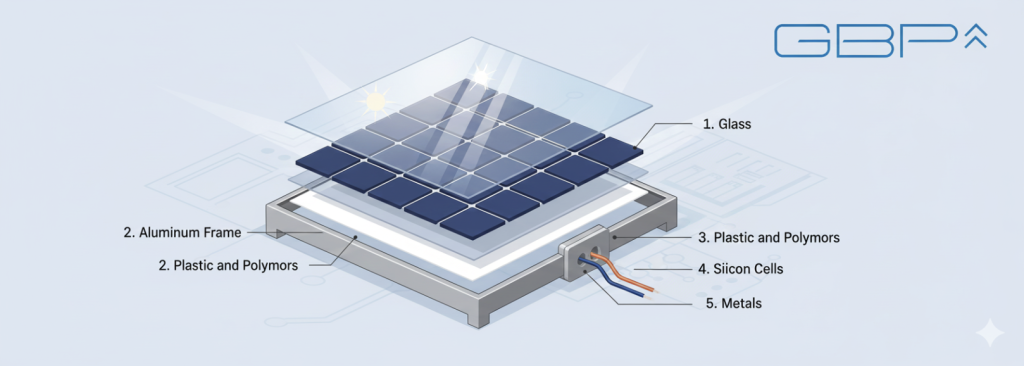
Crystalline-silicon modules account for over 90% of global installations. They contain valuable materials including glass (65-75%), aluminium (10-15%), polymers, silicon cells, and precious metals. Advanced recycling technologies can recover between 85% and 95% of these materials.
Modern PV recycling systems use mechanical, thermal, and chemical processes to efficiently separate and refine component materials. These methods enable the reintegration of recovered materials into manufacturing supply chains, reducing the need for new resources.
Evolving Recycling Strategies
Solar panel recycling is now a strategic component of global supply chains. The rising demand for critical materials, like silver and high-purity silicon, highlights the importance of resource recovery for material security and cost stability.
Lifecycle solutions are now standard in early-stage solar project planning. By integrating end-of-life management into project strategies, the industry is advancing towards a comprehensive approach to asset management that includes performance upgrades and material recovery.
In Japan, GBP K.K. Is a leading company in this initiative. They integrate recycling pathways into solar asset management, supporting circular economy goals and enhancing resource efficiency.
Recycling systems today can recover up to 95% of module materials through combined mechanical, thermal, and chemical processes. This efficiency allows for the reintegration of recovered materials, such as glass, aluminium, and high-value metals, back into the manufacturing supply chain.
End-of-life management of solar panels is now an integral part of early project planning. Lifecycle solutions providers combine asset management and recycling strategies to address the growing volume of decommissioned solar modules.
As a result, the end-of-life wave of solar installations is accelerating globally. Ageing photovoltaic assets and performance degradation are driving a rapid increase in decommissioned solar modules.
Last updated: 29 June 2026, 11:57 am