

UNSW Research Unlocks Ocean Data
Researchers from UNSW Sydney have developed a groundbreaking tool capable of detecting blue whale songs with almost 100% accuracy, using just a single sample song as its training data. This advancement could transform how scientists study marine life.
Ben Jancovich, a PhD candidate at UNSW, led the team in using deep learning models, which traditionally require thousands of recordings, to achieve remarkable precision with only one recording.
The development relies on neural networks, which recognise patterns through interconnected layers of artificial neurons. This allows scientists to analyse rare species over long periods, revolutionising ecological studies by automating the analysis of acoustic recordings.
Advanced Detection Methodology
The research team repurposed an automated system originally designed for human speech detection to identify whale calls. This system processes audio records by applying modifications like pitch shifting and time stretching to a single blue whale call, generating an extensive training dataset.
Tested on real recordings, this method demonstrated a detection accuracy of 99.4% for a pygmy blue whale population. The tool’s capability to simulate natural variations in whale songs underscores its effectiveness and potential applications.
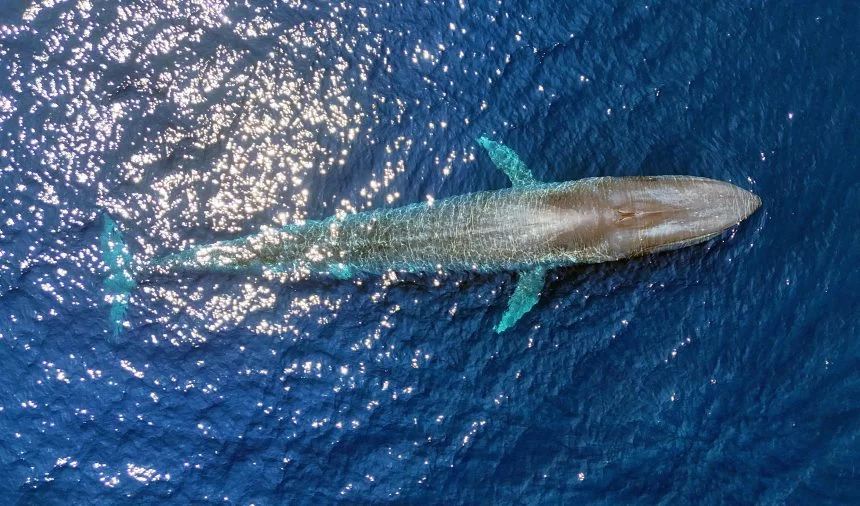
Blue whales, known for their consistent vocalisations, present an ideal subject for this tool. Their calls vary by region, such as those near Madagascar compared to Antarctica, making them suitable for modelling realistic variations.
Jancovich highlights the efficiency of the data augmentation process, noting, “The surprising outcome is that a relatively simple data augmentation process enables really good performance from that one single training example.”
Looking ahead, the team plans to apply this tool to a 25-year dataset from the central Indian Ocean, potentially revealing long-term changes in blue whale songs and enhancing our understanding of marine mammal behaviour.
Jancovich explains that manually analysing datasets spanning decades is impractical for humans. Although automated methods have been developed, they have been limited by the absence of large, labelled training datasets for rare or hard-to-record species.
To address these limitations, Jancovich and his team built an automated detector system based on an existing system originally trained to detect human speech. This design allows scanning vast audio archives for whale calls, significantly improving the efficiency of data analysis.
Jancovich stresses the importance of making high-performance, affordable, and accessible tools available and open source, enabling comprehensive analysis of long-term datasets. These resources can unlock valuable information about marine life.
Last updated: 29 June 2026, 12:20 pm