

Successful Breeding and Expansion Along Hacking River
Three years after reintroduction, the platypus population in Royal National Park has expanded to 20 individuals as of May 2026. Recent surveys by UNSW scientists confirm this significant milestone.
Following the release of four additional platypuses into the Hacking River, the population continues to grow. The new additions include males Absinthe and Duckie, and females Hydra and Dawn.
A sense of accomplishment is shared by Associate Professor Gilad Bino from UNSW’s Centre for Ecosystem Science. He remarked, “It is a privilege to be part of bringing platypuses back to a part of their former range where they had been missing for generations.”
Reintroduction Success
Since the programme began in 2023, the Platypus Conservation Initiative has translocated 17 platypuses to the park. The initial cohort included 10 founders, followed by more releases in 2025 and 2026.
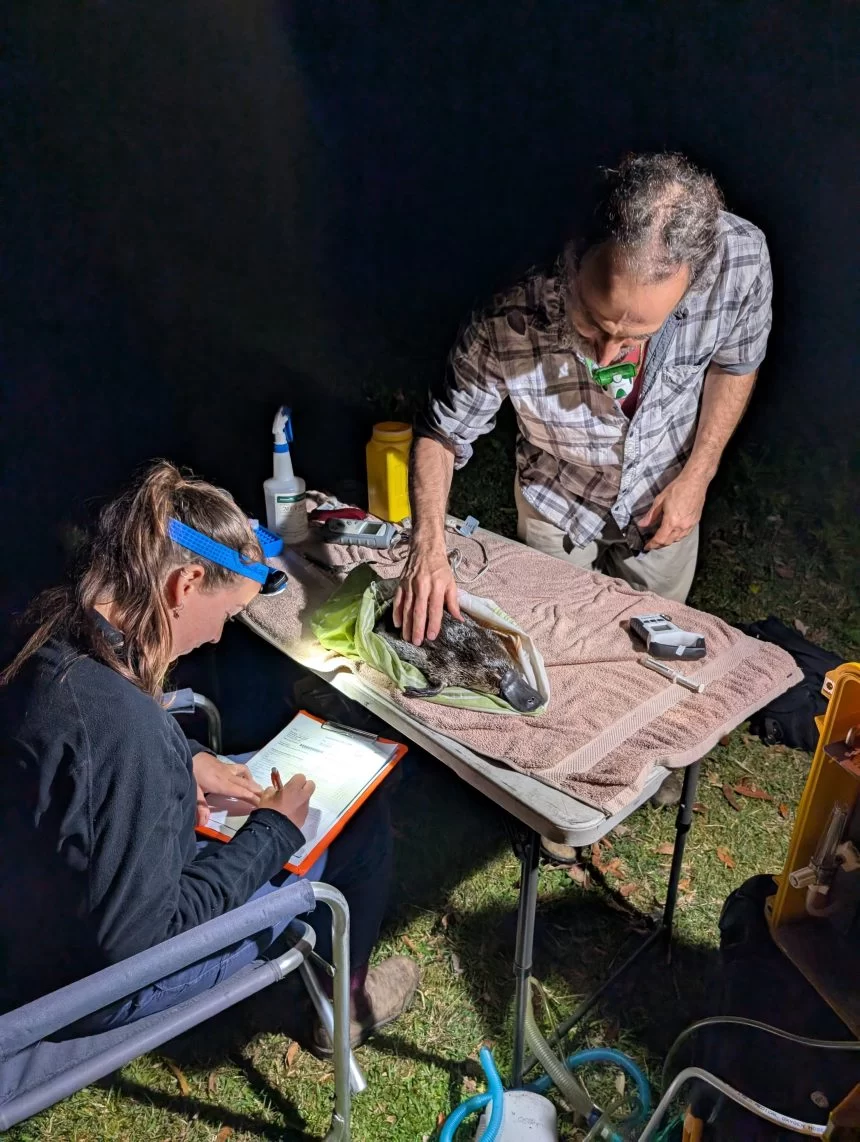
Prometheus and Noris, two males from the original cohort, were encountered again during the latest surveys. Prometheus was confirmed last year as the father of Gili, the first juvenile born in the park. A new subadult male born in the park was also identified, indicating successful breeding.
Dr Tahneal Hawke, a co-lead on the project, stated, “We now have multiple age classes in the park, evidence of breeding across consecutive seasons and animals interacting with the river system as a healthy platypus community should.”
Transmitters are carried by each platypus to monitor their adaptation to the Hacking River environment. The programme aims to continue supporting population growth while maintaining genetic diversity.
Platypus sightings along the Hacking River delight visitors, marking a significant return after more than 50 years of absence. This public connection is one of the most rewarding outcomes of the initiative. Before 2023, platypuses were absent from the park for over five decades.
Future surveys will focus on monitoring the population’s survival, movements, and reproductive success. The Platypus Conservation Initiative is committed to ensuring the long-term resilience of this recovering population.
Dr Hawke emphasised that the presence of multiple generations is a promising sign of a stable and growing population. “The results are exactly what we want to see at this stage of the project,” she says. Visitors frequently report seeing platypuses along the Hacking River, strengthening the bond between the public and wildlife conservation efforts.
Last updated: 29 June 2026, 12:01 pm