


Seeped in tension from start to finish and packed with big ideas, It Was Just An Accident boldly examines human morality within an oppressive system.
Mild spoilers ahead, none of which are accidental.
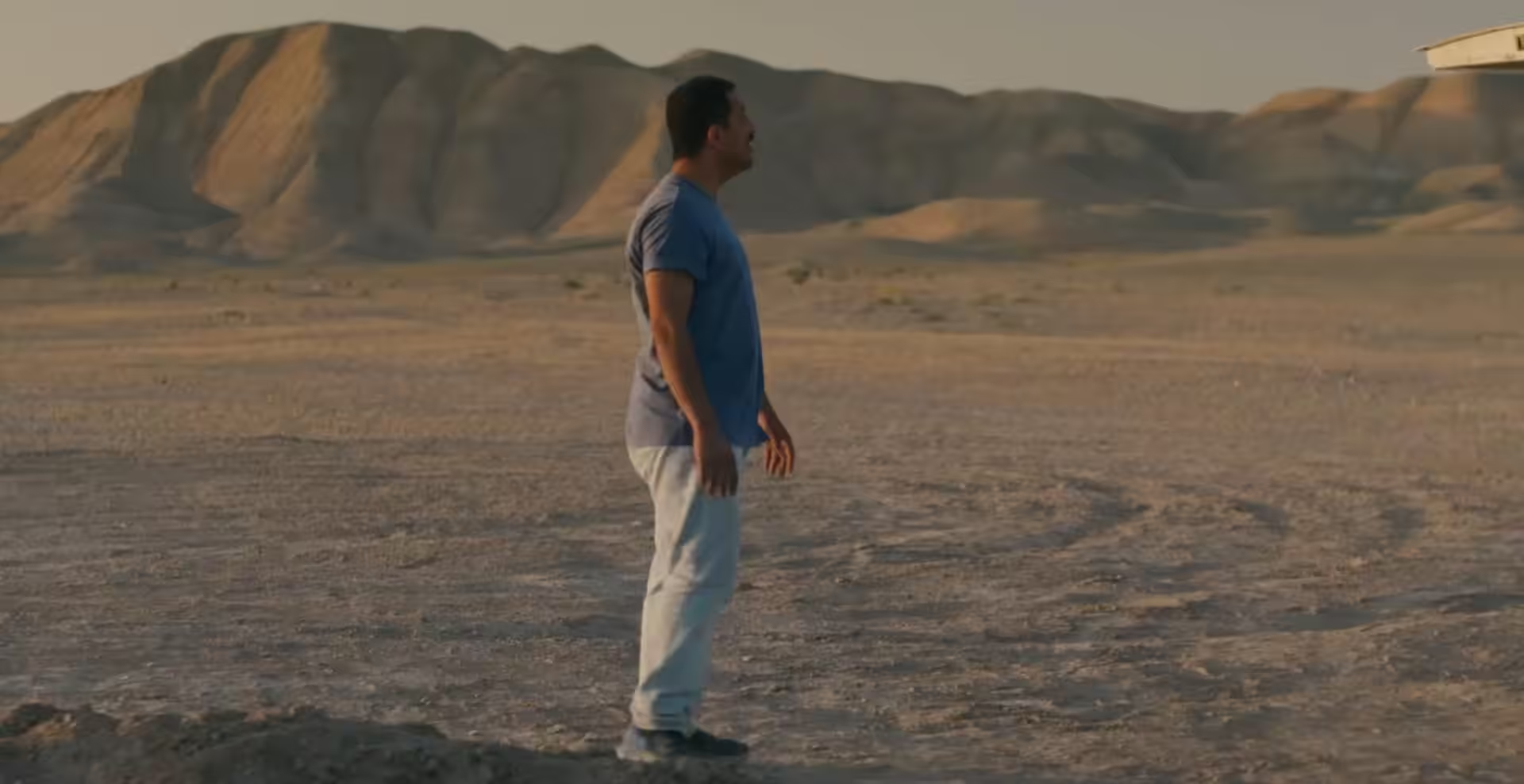
A man and his family roll into mechanic Vahid’s (Vahid Mobasseri) garage late one night following a car accident. Turns out this strange man is none other than Eghbal (aka ‘Peg Leg’), the person who tortured Vahid for years while in prison. Pure emotion taking over common sense, Vahid abducts Eghbal, takes him to the desert, and is about to enact his revenge when a sobering thought stops him: What if this isn’t my tormentor? If this man is my tormentor, what do I do then? Am I capable of doing what he did to me? Why am I even entertaining such terrible thoughts?
Revenge is typically a fantastic driver of narrative conflict and it puts us in a power fantasy position as we watch how the protagonist gets his own back. Director Jafar Panahi elevates It Was Just An Accident well beyond a simple revenge movie by using the premise to explore difficult human questions and how the oppressive political system forces its will onto the populace.

There are no easy answers to be found here and ‘easy’ is definitely not how one would describe Panahi’s experiences. He’s been arrested by the Iranian government for being a dissident several times, banned from filmmaking in Iran (later rescinded in 2022), painted as a villain by his own country, and was subjected to, ahem, ‘enhanced interrogations’ (i.e. ‘torture’). It Was Just An Accident may be a scripted thriller on paper, but it feels like a brutally honest reflection of Panahi’s experiences (which he admits is the case) squeezed into the best 104 minutes you’ll watch all year.
I’ve never sought (or been the target of) revenge on anyone or been subjected to ‘enhanced interrogations’, but I daresay that many people can relate to the scenario of randomly bumping into someone from your past who has caused you great pain. What would you do in that situation? Would you confront them and hope that it gives you catharsis, or do you think it’s not worth reopening old wounds lest you become no better than them?
The moral back-and-forth is the powerful engine that drives this gripping movie, a slow-burning urgency, building and building as each long scene rolls onto the next. The camera is still almost the entire time, with barely any cuts. Panahi doesn’t want things to be resolved quickly, opting to have us sit in each tension-building moment with almost no respite.
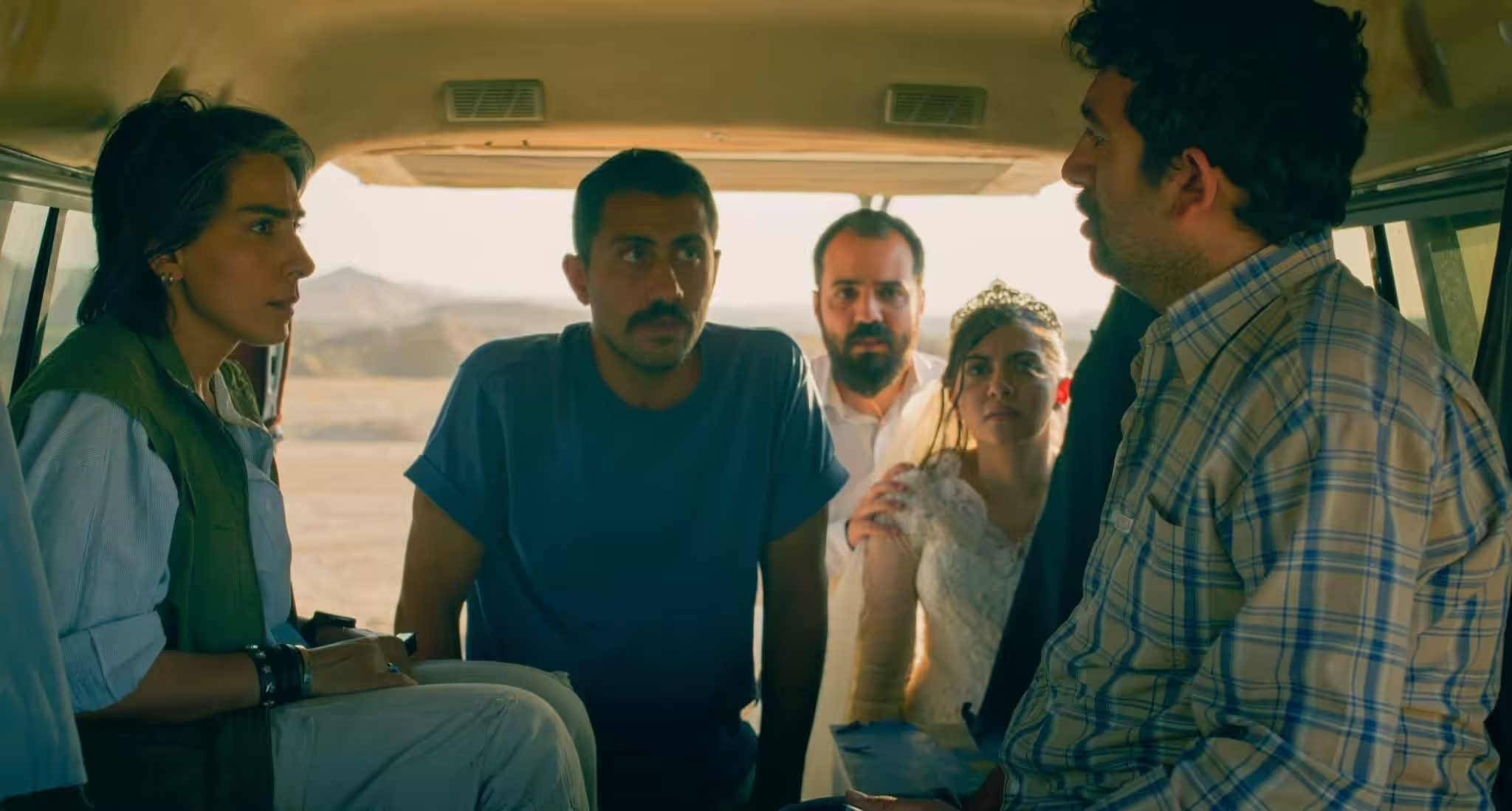
With the scars of his torture remaining forever present like his (alleged) tormentor’s missing leg, Vahid feels like he has no other choice but to stuff his captive into his van and road trip around Tehran looking for other ex-prisoners who can help confirm the captive’s identity. Besides, it’s not like Vahid was going to let this man go just because he denies being Eghbal.
As more characters get roped into Vahid’s impromptu road trip, things get more complicated as events unfold with the precision and humour of a Park Chan-wook movie. His friend Salar (Georges Hashemzadeh) wants nothing to do with this mess and suggests Vahid abandon it. If only it were that easy, but we aren’t wired like that. When the prospect of catharsis in the wake of immense pain is potentially within our grasp, how can we say no to that?
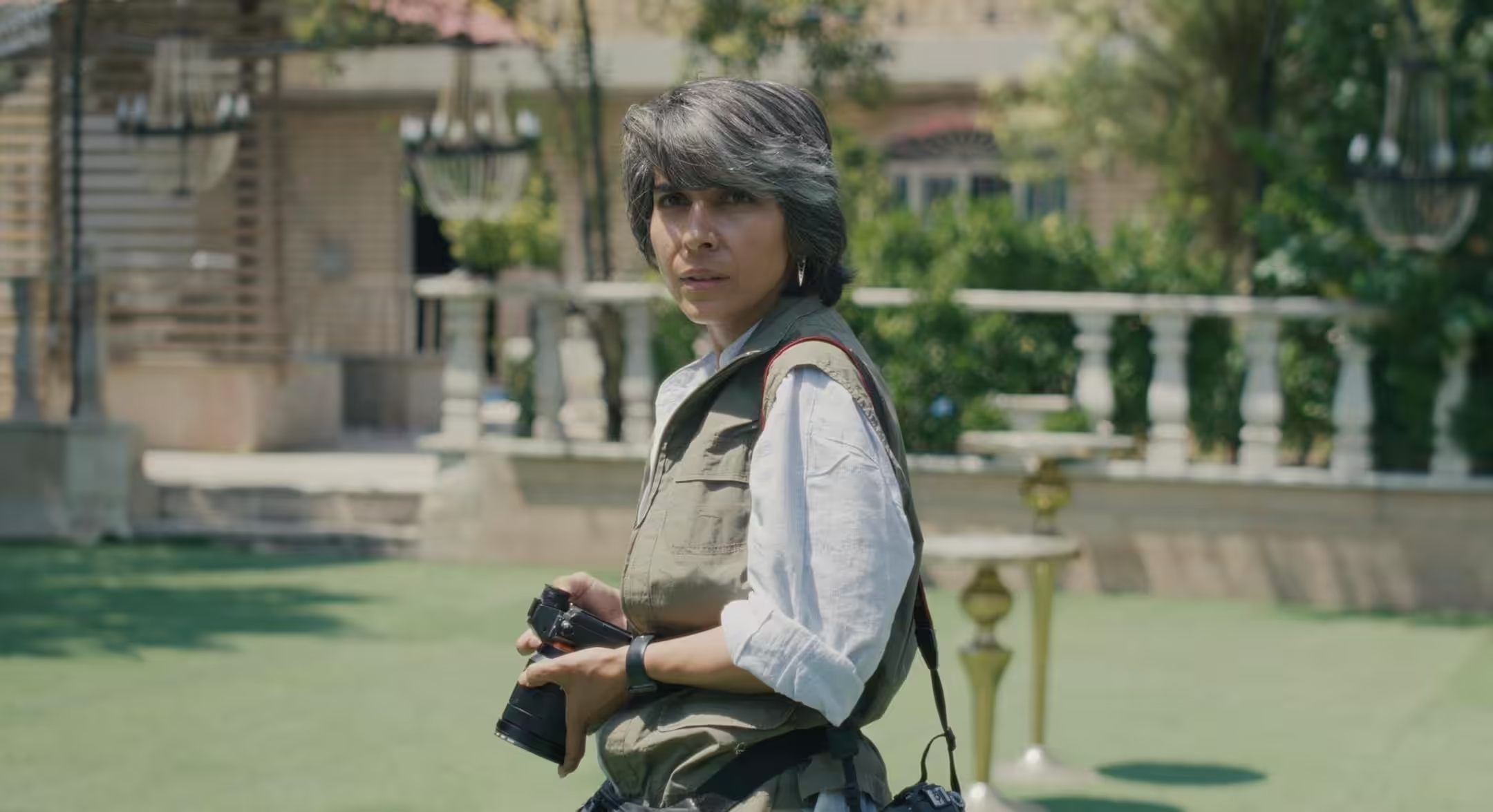
We’re soon introduced to photographer, Shiva (Mariam Afshari), a soon-to-be married couple, Ali and Goli (Majid Panahi and Hadis Pakbaten respectively), and a loose cannon, Hamid (Mohammad Ali Elyasmehr), all of whom bar Ali, were ex-prisoners and were subjected to Eghbal’s cruelty. Holding this ragtag group together is Vahid’s subtle performance. Everything he does and reacts to – whether it’s something idiotic or pragmatic – is fundamentally human rather than like some hapless fool. That is a hard thing to pull off, and I daresay It Was Just An Accident almost doesn’t work quite as well without Vahid (the actor).
All of these characters not only represent one aspect of the oppressed Iranian populace, but each also functions as a potential answer to the moral questions hovering over It Was Just An Accident. Shiva is the pacifist artist who believes Eghbal should be given the chance to defend himself; Hamid can’t hold down a job and is willing to risk it all to ensure Eghbal gets his just desserts, morality be damned; and Ali is the neutral outside observer whose opinion ultimately matters little as he has no skin in the game. Arguments are plentiful, and it’s clear that Panahi is pragmatic yet understanding of all these different viewpoints. Whatever view you may have, whether it’s being a pacifist or an extremist, it is still valid.
Goli is similar in her worldview to Vahid, but she operates as the visual representation of each character’s moral slippage, the longer this whole thing goes on. Her pristine white wedding dress becomes grimier across each act, until you completely forget that she and Ali are meant to be married the next day. Perhaps the most notable aspect of It Was Just An Accident is how the main female characters don’t wear a hijab at any point, which is almost certainly a nod to the increasing resistance towards dress code laws by Iranian women.
There’s a lot of humanity pushing this movie towards its incredible coda – arguably the best ending of any movie in 2025 – but what each character represents, the wider themes of authoritarianism, and whether to adapt or reject the new present-day political paradigm extend beyond Iran. With the rise of wannabe fascists around the world, it’s easy to map any headline-generating country to the criticisms dished out by It Was Just An Accident.
As all the ex-prisoners react emotionally to their (alleged) tormentor being tied up in Vahid’s van and at their mercy, the tension occasionally gives way to the odd moment of comedy. There’s a great oner where Vahid is pushed out of his van while Shiva, Goli, and Ali try to identify their captive, and all he can do is pace back-and-forth like an antsy Buster Keaton while trying to sneak a peek at what the others are doing. 10 minutes later, the group moved to a parking lot for more debating, only to draw suspicion from two security guards, who honestly don’t care what this group is up to as long as they get a nice bribe (via bank card because no one has cash on hand). This whole situation is truly absurd, and it’s ridiculous not to acknowledge it, so Panahi just lets it play out organically, and you end up laughing despite the high stakes at play.
For all the heaviness on a micro and macro level on display, It Was Just An Accident ultimately finds hope amidst the struggle against larger forces. Hell is never far away, but we can be more than what others try to inflict upon us. Jafar Panahi has been to hell and back, and still retains optimism that things will get better. Surely we can take a leaf out of his book by retaining our values during times of immense difficulty.