


Masterfully acted and deftly scripted, Sentimental Value is a powerful exploration into generational trauma and the link between art and connection.
Some minor spoilers of the non-sentimental kind ahead, you’ve been warned.
Why is it so hard to just talk to people sometimes, especially your supposed loved ones? Is it so hard for some people not to be horrible whenever empathy is expected? Do we inevitably pass on our baggage if we are unable to process and express these things in some cathartic way? Why do we project our shortcomings on physical things that ultimately have little bearing on who we are as human beings? Human intimacy is truly quite a fickle thing.
Joachim Trier doesn’t give us – or perhaps simply doesn’t have – the answers in Sentimental Value, but he does a fantastic job unpacking the aforementioned ideas in a rich tapestry of family dynamics, generational trauma, artistic expression, and emotional connection (or lack thereof).
Stage actress Nora Berg (Renate Reinsve) and her historian younger sister, Agnes (Inga Ibsdotter Lilleaas), have a complicated relationship with their filmmaker father, Gustav (Stellan Skarsgård), who abandoned their family when Nora and Agnes were children. After years of estrangement, Gustav reenters Nora and Agnes’ lives following the death of their mother, and he seems to be a changed man.

Review: Sentimental Value is a brilliant look at connection and artistic expression
After years of wandering in the creative wilderness, Gustav is prepping to make his first movie in 15 years, and what’s more, he wants Nora to star in it. That sounds quite generous (if a bit nepo baby coded), but Nora immediately – and angrily – declines. Clearly, there’s residual scar tissue there, but neither is exactly willing or equipped to discuss their issues in any constructive manner. Nora assumes the worst and is unable to contain her resentment; Gustav inadvertently twists the knife further by casting famous American actress Rachel Kemp (Elle Fanning) in the lead role instead.
That is just one of many fantastic scenes between any of the lead actors. Their onscreen dynamic is rife with subtext and tension whenever they share the screen in some combo. Other movies try so hard to make a fictional family believable that it becomes grating, but Skarsgård, Reinsve, and Lilleaas underplay all those honest moments.
There are no melodramatic arguments or outbursts of emotion. Everything patiently builds as Trier’s brilliantly-paced, exposition-light script keeps that tension simmering away until just the right moment for everything to come crashing down later. A simple gesture or smile – like Gustav and Nora wordlessly sharing a cigarette – conveys years of familial history far better than heavy-handed metaphors or stupid banter.
This goes hand-in-hand with Sentimental Value’s vignette-esque structure as the movie is essentially broken down into several chapters with hard cuts to black, further reinforcing the whole “life is just a series of events” vibe. This is such a performance and subtext-driven movie that it can be easy to overlook some of the top-notch craft on display. From the grainy flashback sequences to the stunning concluding oner, the visual language is as confident as the narrative without drawing attention to itself.
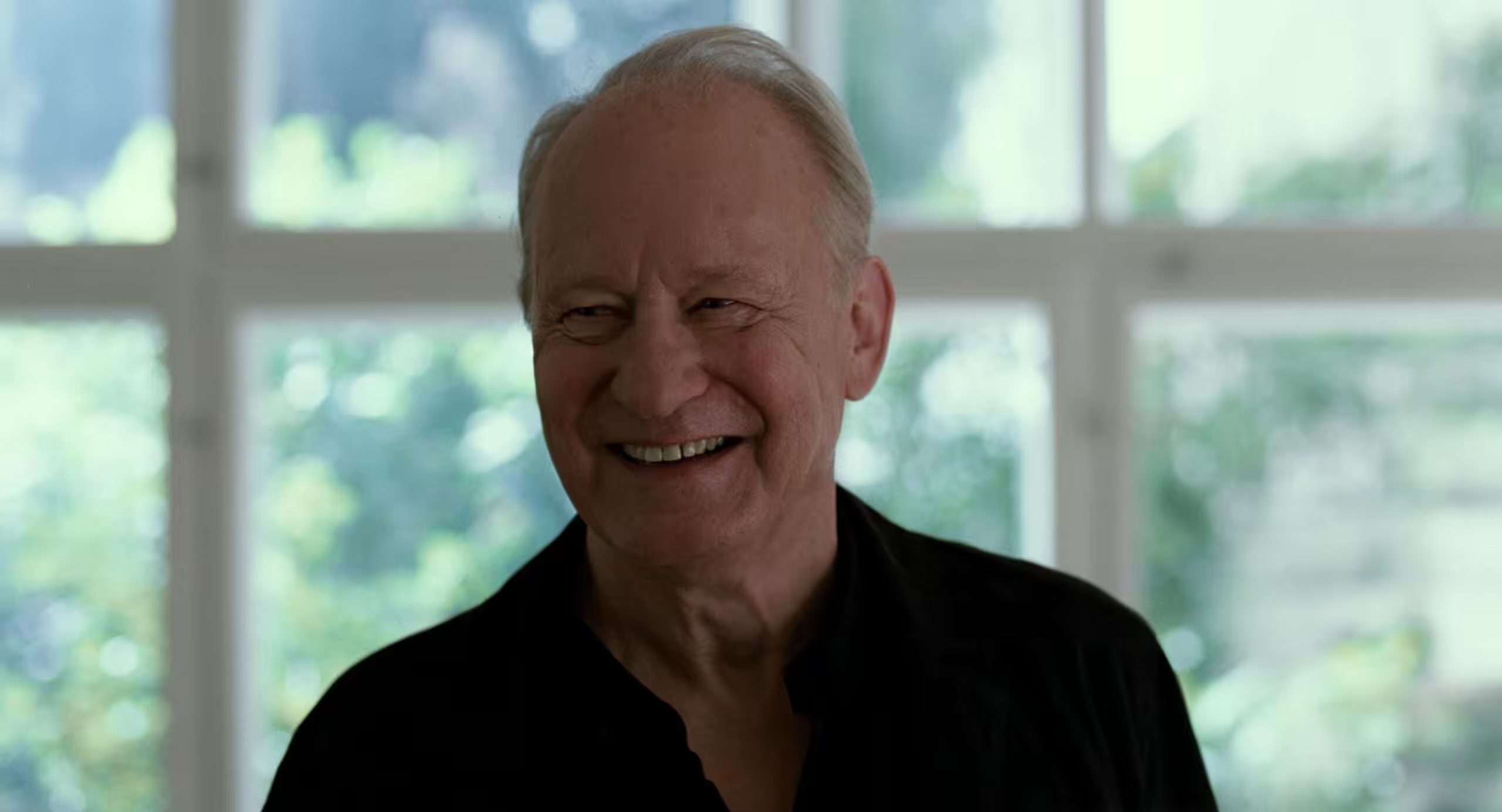
It’s this honesty and lived-in feel that keeps us invested in what exactly is going on with this messed-up family. Gustav’s intentions are undoubtedly sincere, but he’s also unapologetic in his pursuit of artistic expression over his family and is unsparing in his micro-aggressions whenever something close to human empathy is within grasp. The scene where Gustav chastises Nora for not having a family when given the rare opening of saying something nice rang as true as any real family interaction I’ve witnessed and experienced.
Make no mistake, Gustav is a man full of contradictions who is far from a saint. But Skarsgård skillfully plays him as someone who isn’t a bad person, just someone who’s made bad choices. Agnes sees this and is trying her best to accept that her father is doing his best despite his (unintentional) efforts to dissuade her. It’s a testament to the patience and warmth Lilleaas brings to Agnes because you get the feeling that 99 per cent of other actresses would have a more combative take on the character.
On the other side of the ring, Nora is clearly trying so hard not to be like her father – the dramatic irony of her being an actress as a way to achieve this is fascinating and tragic – yet it slips through despite her best efforts. Reinsve keeps the lid on what is going on in Nora’s head, only occasionally letting things slip out. It’s a masterclass of control and “show, don’t tell” acting that’s sorely missing as of late.

Deep dives into family and generational trauma are messy, and the people at the centre of it all almost never want to address it. Trauma has been a leading theme for many movies this year (some brilliant, some merely okay), and Sentimental Value isn’t exactly novel in its message – i.e. trauma is passed down and processed through artistic expression. But while the movie doesn’t have a definitive answer, it does offer a touch of optimism that things can and will get better if the work is put in by the right people in the right way. Unfortunately for some characters in this movie, they’ll forever remain on the outside.
The Rachel Kemp character functions as little more than a conduit for Gustav to express his feelings towards Nora, but Fanning is just so good at projecting curious naiveté and self-awareness that Rachel becomes part of the tapestry. Her brilliant monologue during script rehearsals and the later realisation that Gustav is trying to mould her into Nora is gut-wrenching because she can’t reach the depths that he needs/wants.
The movie’s title is name-dropped early on when Agnes and Nora are sorting out their late mother’s things, but this is a bit of a misdirect as this nostalgic tenderness isn’t exactly at the forefront here. We may not be able to control what’s been done, but we can control what’s to come and how we can learn from those lessons of the past. Rather than look backwards, Sentimental Value wants to show us that the path forward is hard-earned but worth the effort, and that’s a pretty damn positive message to bestow upon everyone.