

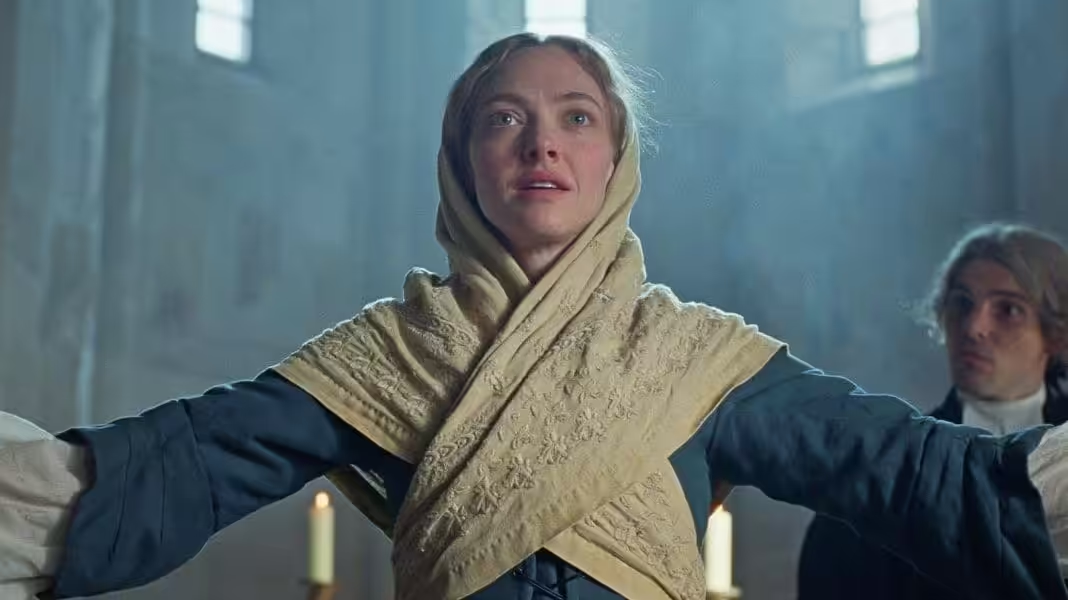
Visually stunning with a brilliant soundtrack, The Testament of Ann Lee is a strange musical biopic that may prove polarising.
The Testament of Ann Lee is a really strange movie. It’s a ‘cradle to the grave’ biopic of Ann Lee, the founding leader of a religious sect in the 18th century called the Shakers. It’s an intense examination of how horrible personal trauma and artistic expression are intertwined with a cult of personality. And it’s also a musical with singing and meticulously rehearsed choreography, but not of the traditional theatre kind. It is a lot.
For those who are unaware of who the Shakers are, they’re a religious sect that lives a celibate and utopian communal lifestyle where they partake in ecstatic, over-zealous dancing and behaviour during their worship services. Not only does director Mona Fastvold depict several worship services throughout the movie, but the pacing and structure are almost in sync with a Shaker dance. Events unfold linearly, but all of a sudden there’s a jink here or a jerk there, and we learn something important.

Ann Lee’s life was filled with an awful amount of tragedy and pain (both physical and emotional). From an impoverished childhood filled with corporal punishment for watching her parents have sex to her struggles in reconciling her aims of spiritual transcendence with the cold, muddy reality of 18th-century Manchester, it’s not difficult to understand her crises of faith. When Amanda Seyfried takes the screen as Ann, she’s already taken a few knocks, yet the worst is to come. At this point, you’re already wondering if you can stomach more, yet you know the answer is not what you’re looking for.
Already carrying a dislike of sex due to the unintentional spying on her parents, things escalate after she reluctantly marries an S&M-loving blacksmith, Abraham Standerin (Christopher Abbott). Not only does she have no choice in whether to have sex with Abraham or not, but her life continues to crumble after four agonising – and graphically depicted – childbirths and four tragic child deaths. Fastvold wants us to sit in the pain as the camera uncharacteristically stays still during the most awful moments of Ann’s life. Whatever life was in her eyes has been replaced with a mix of grief and madness, yet the underlying determination remains. Whether you can stomach this sequence or not will have a major bearing on how much you will ultimately like this movie.
The link between channeling personal trauma into imagination or creative expression of some kind puts The Testament of Ann Lee in the same realm as Hamnet. Both movies are period pieces where the main characters find healing by focusing fanciful construction. But whereas Hamnet draws a linear path between trauma and healing, Ann Lee is a journey of trying to find that healing. Trauma recovery goes at its own pace without the promise of answers, something this movie captures well.
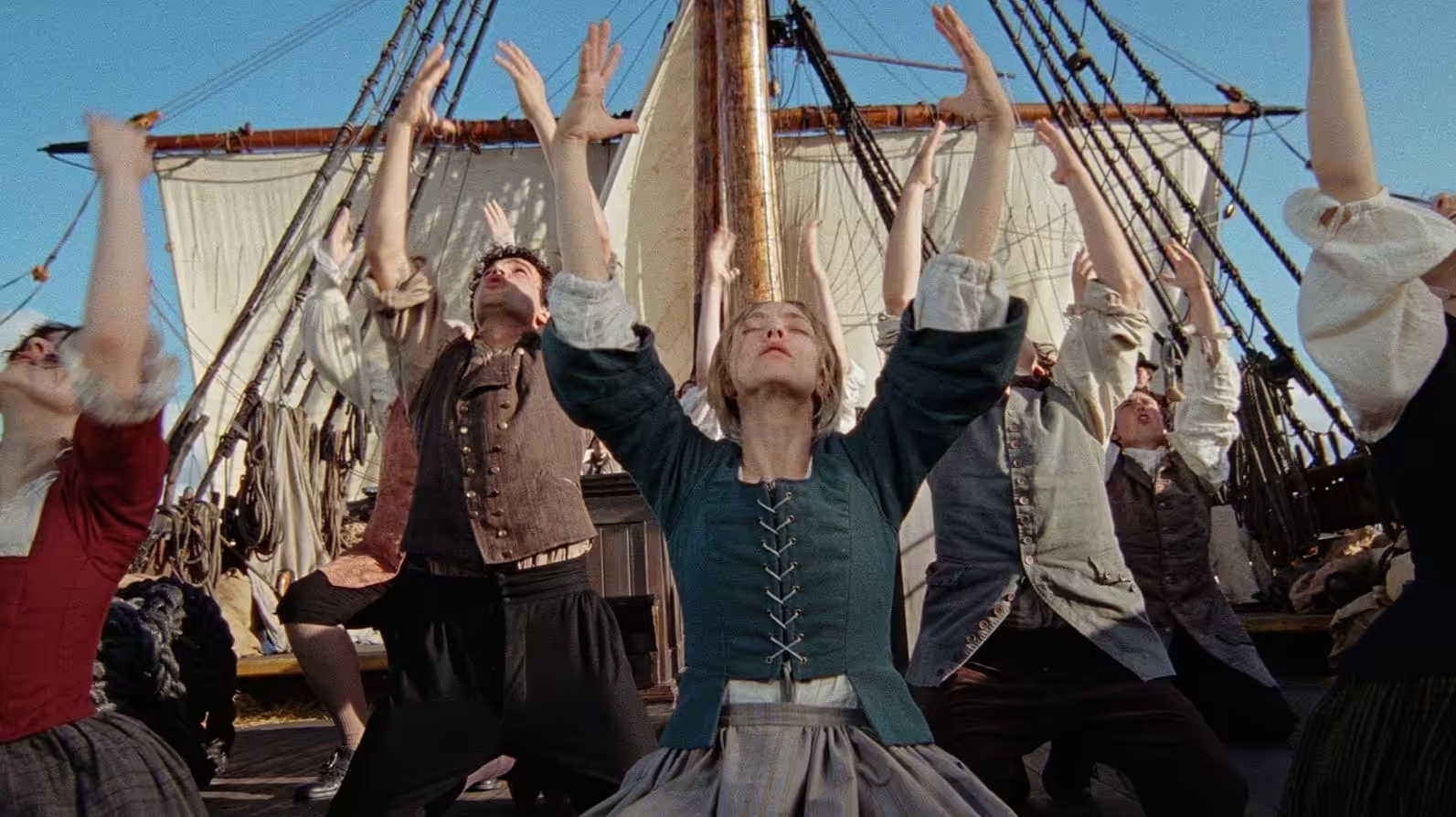
By the time we arrive at the point where the Shakers become a reality, you’re almost able to overlook how strange they are because of the journey Ann has been on already. I’m no historian, but I’m pretty certain the standards of psychology and therapy were pretty lacking in 18th-century England. When faced with a tremendous amount of accumulated trauma, what else can you do but start a weirdo religious sect that loves music to try and cope?
All this is to say that Ann Lee is quite a unique person to depict, yet it is all completely believable courtesy of an all-time-great performance from Amanda Seyfried.
We already know Seyfried can elevate stylised trash into respectable territory like it’s nothing, but her work in The Testament of Ann Lee is S-tier level good and easily one of 2025’s best. She has to internalise several lifetimes of pain within her, while carrying herself with the charisma of a cult leader and projecting a clear sense of her spiritual ideology in the face of adversity; she has to sing, but in an animalistic rather than melodic Mamma Mia way; she has to dance and move her body in ways that would put Timothée Chalamet’s ping pong efforts to shame; and she has to endure a horrendous amount of physical strain in the many childbirth scenes and sequences of graphic violence.

I honestly can’t think of a role that demanded so much from an actor on a physical, mental, and emotional level. I would not hesitate to put Seyfried’s performance in this movie as one of the 21st century’s finest cinematic showcases. How she can make a sect as weird as the Shakers credible is a testament to her skill.
Make no mistake, though, the Shakers are a weird bunch, especially to people with a 21st-century sensibility of spirituality and faith. There’s a lot of singing combined with feet-stomping choreography, all aimed at achieving catharsis. Watching all this emotional hysteria unfold is a profoundly strange experience, yet you can’t help but get drawn in.
A big part of why The Testament of Ann Lee is able to draw you in is the brilliant music by Daniel Blumberg. He reinterprets old Shaker hymns as eclectic contemporary musical numbers that capture the sect’s vibe beautifully, all while luring you into a trance. There’s also the historical context that makes it all seem plausible in 18th-century England/America. People of that time were seemingly stuck in a vicious cycle of misery while the American Revolutionary War unfolded in the background. You can understand how desperate people would cling to whatever bit of hope they can get, even if it came from someone who was really into exhausting three-day prayer sessions involving non-stop writhing.
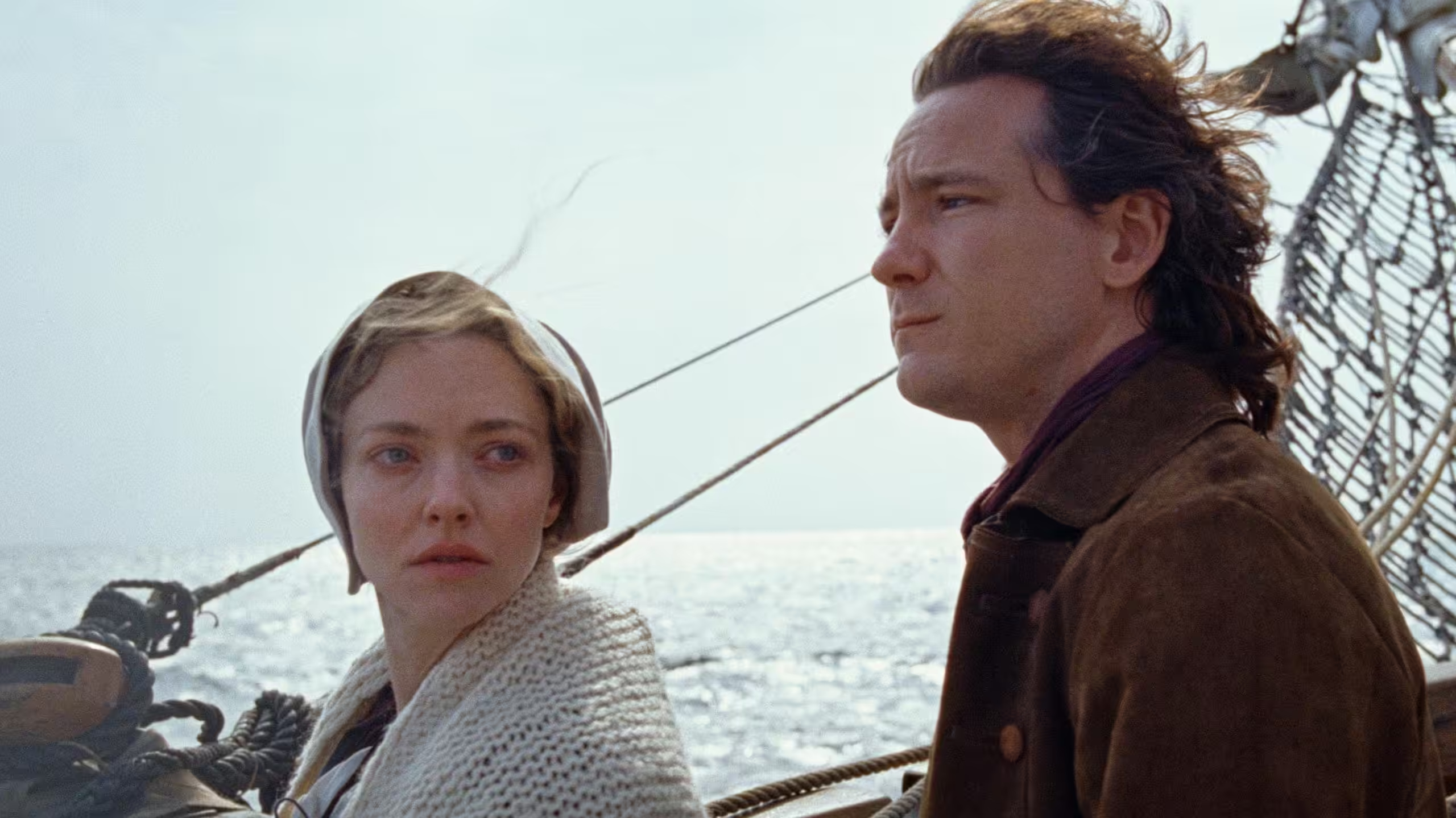
Watching all that aforementioned non-stop writhing set to bombastic music is as mesmerising as it is uncomfortable. Fastvold depicts everything without any hint of irony. There is a universe where another director would depict the Shakers with a wink and turn everything into a big ‘see how weird these weirdos are’ type of joke. But Fastvold opts to depict the religious sect and their beliefs with objectivity for the most part.
Take an early extended prayer/dance scene not long after Ann has a divine experience that convinces her that sex is the root of all evil, and that she’s the second coming of Jesus. As the camera gyrates in rhythm to all the characters’ dancing, the writhing soon becomes even more physical and intimate. One can imagine that if someone were to spray a powerful aphrodisiac into the room, this worship service would devolve into a massive orgy.
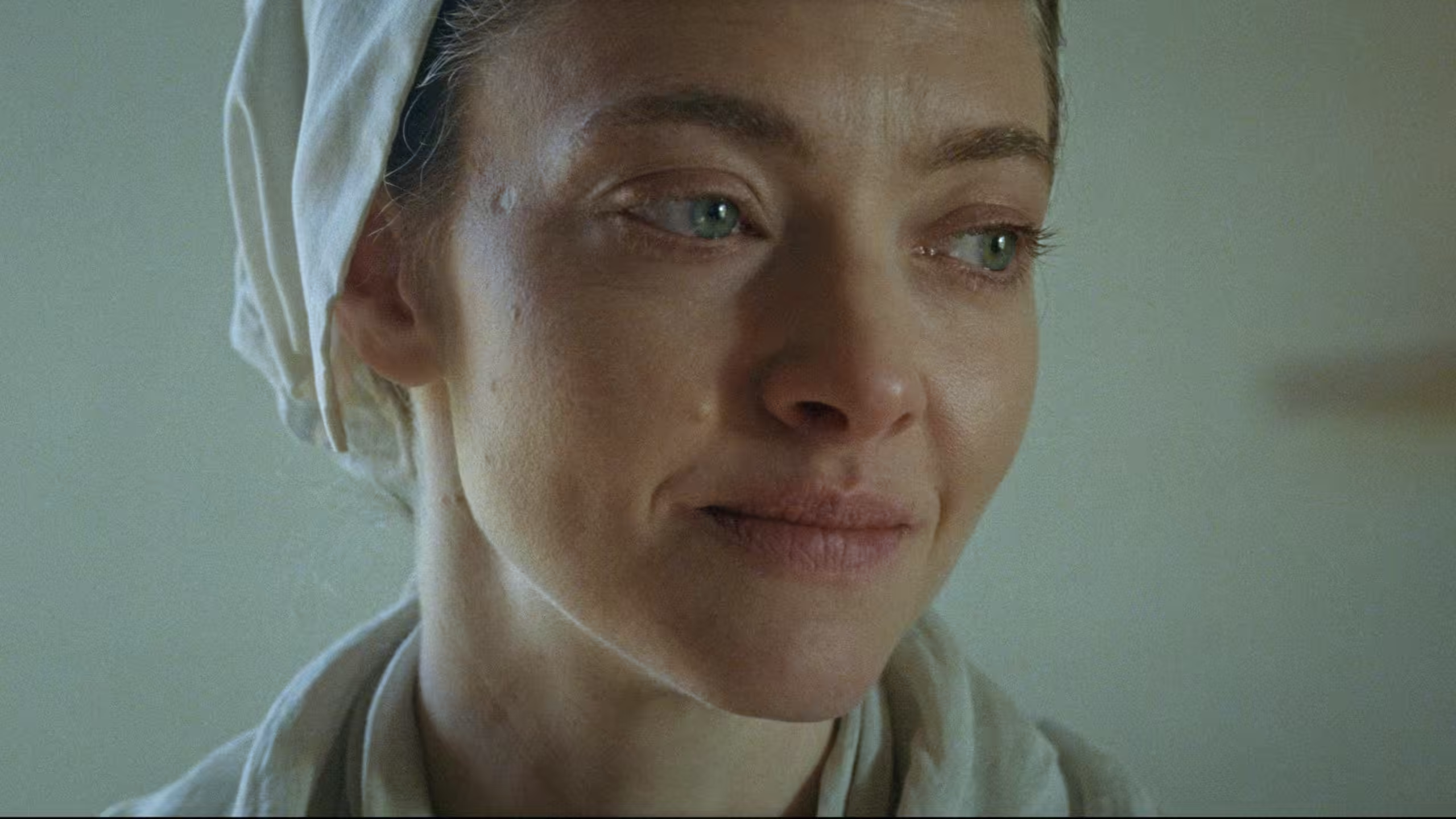
Fastvold isn’t necessarily making a comment or judging the Shakers here. Rather, she’s showing us what they do and asking us to hold their beliefs up to scrutiny. The Testament of Ann Lee feels neither a celebration nor a criticism of the sect. It’s more akin to a portrait. Fastvold gives us the pieces and leaves us to make up our own minds about them. That she’s able to craft those pieces into one of the most visually stunning movies of 2025 is a feat in and of itself. There are Shaker worship scenes so kinetic your teeth fillings will be shaken out, gorgeous sweeping landscapes of 18th-century New England, and an epic ship journey sequence that combines all of the above while set on a ship. Stunning. Just stunning.
Whether you’re able to be in the headspace to make up your mind about Ann Lee and the Shakers ultimately depends on your stomach for grimness. The distinct lack of catharsis throughout the movie can make it quite the slog. Some parts I’ll even describe as boring. What I can say is that watching Amanda Seyfried operating at her best is always a pleasure, even in a movie as eclectically bizarre as The Testament of Ann Lee.