

Satellite Technology Unveils Hidden Reefs
On 19th April, scientists from the Australian Institute of Marine Science (AIMS) announced the discovery and mapping of over 1000 previously uncharted coral reefs in northern Australia. The mapping stretched from Houtman Abrolhos in Western Australia to western Cape York in Queensland. These reefs were previously overlooked in conservation efforts due to their sediment-rich waters, despite being habitats for diverse marine life.
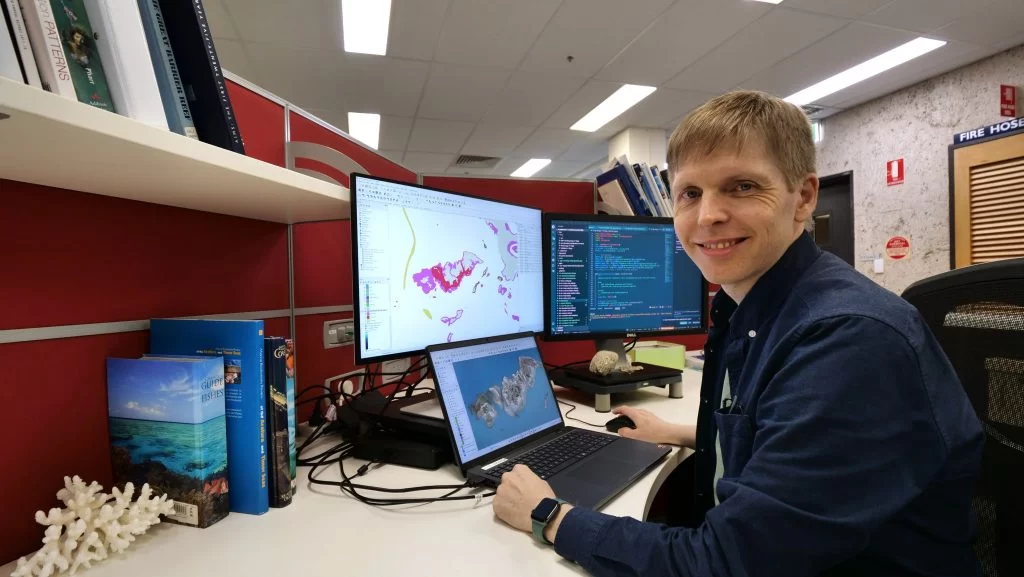
The Marine and Coastal Hub project was led by AIMS in partnership with the University of Queensland. This initiative used satellite imagery to reveal these hidden marine ecosystems, eliminating the need for traditional field surveys. Dr Eric Lawrey, AIMS e-Atlas Project Manager, conceived the idea 12 years ago when satellite imagery like Google Earth became common. He noticed potential coral reefs while examining satellite images of the northern Australian coastline.
Innovative Mapping Techniques
Overlaying 200 satellite images allowed the team to enhance reef visibility by averaging out water movement patterns. “Their signal gets reinforced, allowing us to peek deeper into the water column than we could in one image,” Dr Lawrey stated. This method revealed that northern Australia has a similar quantity of reefs as the Great Barrier Reef, albeit many are smaller.
The project identified over 3600 coral reefs and 2900 rocky reefs along the northern Australian coast. These findings provide a more comprehensive view of the region’s marine biodiversity, supporting a wide range of marine life and aiding in environmental planning. Previously, northern Australia’s coastline was mainly unsurveyed, with marine charts that did not differentiate between coral and rocky reefs. Now, the team has created the first detailed view of coral reef boundaries.
The data is publicly available through platforms such as eAtlas and AODN, promoting greater awareness and protection of these ecosystems. Funded by the Australian Government under the National Environmental Science programme, this project enhances understanding and preservation of Australia’s marine habitats.
Dr Lawrey explained that the number of inshore reefs discovered was surprising, posing challenges for the project due to the sheer volume requiring mapping. The discovery highlights the importance of technological advancements in uncovering previously hidden aspects of the natural world.
Last updated: 29 June 2026, 12:24 pm