

Security of Transport and Resources Required
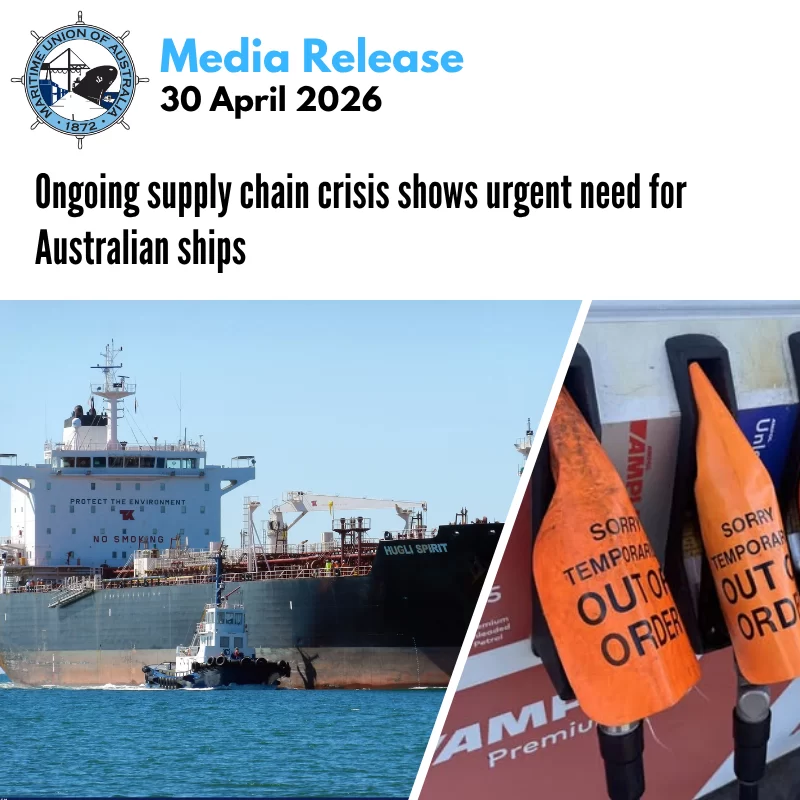
Global conflicts and natural disasters have intensified calls for Australian-controlled ships to secure vital imports of fuel and resources. Increasingly concerned about foreign oil dependency, Australians face a pressing issue exacerbated by the USA/Israeli conflict with Iran. Disruptions in the Strait of Hormuz highlight Australia’s reliance on Middle Eastern crude oil. With only two operational oil refineries, one of which is damaged, maintaining steady access to essential resources is challenging.
Jake Field, National Secretary of the Maritime Union of Australia, noted, “Just-in-time supply chains work beautifully for multinational oil companies, petrol refiners, and international shipowners, but wreak havoc on the communities and societies, the people, that our economies are supposed to serve.”
Recent closures of the Strait of Hormuz compound existing disruptions from COVID, bushfires, and flooding, revealing vulnerabilities in Australia’s supply chain. Over six years, various crises have repeatedly demonstrated these weaknesses.
Field stressed the urgency of deploying Australian-controlled vessels. “There is no security of supply without security of transport, and there is no security of transport without ships,” he stated. Immediate government action to establish a fleet of Australian oil and fuel tankers is crucial.
The Maritime Union of Australia argues that a national fleet would safeguard Australia’s strategic and social interests. Such vessels could be requisitioned during crises, preventing scenarios where essential cargo is redirected or delayed.
Field concluded, “This fleet, strategic in nature, should be the immediate and urgent priority of the Federal Government. The MUA and its members stand ready to support this measure and crew those vessels.”
Years of neglecting domestic refining capabilities have led to Australia’s current situation. Once capable of refining its own crude oil, the nation now relies on imports due to local refinery closures.
Partial restoration of Australian oil refining is a long-term project, yet immediate measures are needed to address the current crisis. The government considers paying top dollar for fuel supply guarantees from neighbouring countries as a short-term solution.
In the context of global insecurity, the MUA insists that relying on foreign supply chains could lead to vulnerabilities. Australian-controlled ships and crews are seen as essential elements for securing a stable supply of oil, fuel, and fertilizers.
“Over the past six years, one crisis after another has smashed Australian supply chains, be it COVID, bushfires, flooding, and now a war of choice by the United States in the Middle East and the Iranian retaliation of shutting down international shipping through the Strait of Hormuz,” Mr. Field said. The Maritime Union of Australia warns that the country has surrendered its economic, defence, and social resilience to market forces of globalized fuel and shipping cartels.
Last updated: 29 June 2026, 12:16 pm