

Fishery logbooks recorded 817 turtle interactions since 2018
WWF-Australia is calling for more marine sanctuaries after Commonwealth fishery logbooks recorded 101 turtle deaths in the Eastern Tuna and Billfish Fishery since 2018.
From 1 January 2018 to 31 December 2025, the logbooks recorded 817 turtle interactions. Official figures show 714 turtles were released alive, including one that was injured.
However, the toll may be higher. An independent review found “a small number of boats are persistently under reporting bycatch”.
With a review of national marine parks due to start soon, WWF-Australia wants more sanctuaries in the Coral Sea Marine Region and the Temperate East Marine Region. That region includes Lord Howe Island and Norfolk Island.
Richard Leck, WWF-Australia’s Head of Oceans, called the review a “once-in-a-generation opportunity” to expand protection. He said threatened species need areas free from mining and fishing where they can migrate, feed and give birth.
Leck added: “We’re calling for 30% of Australia’s oceans to be declared sanctuaries.”
267 Western Pacific leatherback interactions
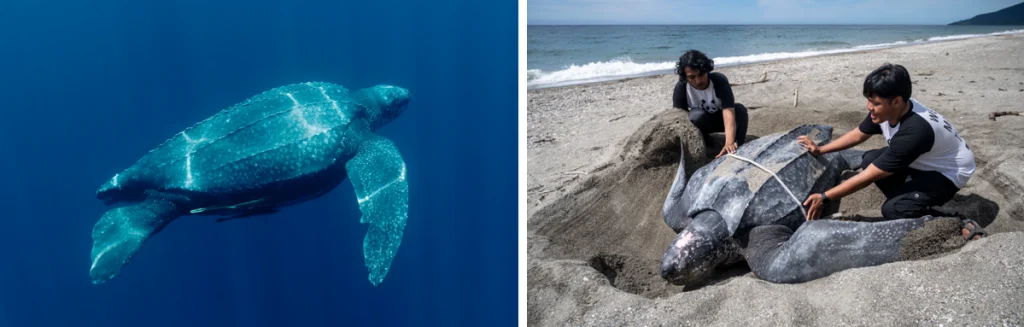
The most commonly caught turtles were leatherbacks from the critically endangered Western Pacific subpopulation. WWF-Australia says that group has declined by more than 80% since the 1980s.
Commonwealth records show 267 interactions with Western Pacific leatherbacks. Of those, 258 were released alive, seven were killed, one was injured, and one had an unknown outcome.
According to WWF-Australia, longline gear can hook, entangle or strike turtles. Commonwealth logbooks record those events as interactions.
Post-release survival in the Australian fishery is not known. Meanwhile, a 2024 review estimated that about 22% of leatherbacks released from the New Zealand surface longline fishery do not survive.
Dr Sean Williamson of Monash University said modelling showed that losing even a small number of extra adult turtles each year could speed up the decline of Western Pacific leatherbacks. Researchers estimated that decline at about 6% a year.
WWF-Australia says the Coral Sea and Temperate East marine regions support more than 400 threatened species and more than 50 habitats. The group wants new or stronger sanctuaries co-designed with First Nations communities and guided by Traditional Owner leadership and knowledge systems.
For millennia, Saltwater people have held cultural and spiritual ties to Sea Country. WWF-Australia says sanctuaries co-managed with First Nations communities should be free from extractive activities and provide safe havens for turtles, whales and other ocean travellers.