

Network protects 96,500 hectares across Australia
Humane World for Animals Australia confirmed on 16 July 2026 that its Wildlife Land Trust had reached 1,000 member properties. Together, those properties protect 96,500 hectares of wildlife habitat.
The Wildlife Land Trust began in 2007. It has since grown into a national network of farmers, eco-tourism operators, conservationists and other landowners.
Members commit their properties to preserving, restoring and enhancing habitat for native Australian species. The network now includes properties in every Australian state.
Those sites span coastal forests, deserts and tropical rainforests. As a result, the programme covers a wide range of Australian ecosystems.
Wildlife Land Trust specialist Louisa Bartels called the milestone a sign of a growing community of Australians acting for wildlife. She warned that native flora and fauna face pressure from habitat fragmentation, climate change, rapid urban development and authorised wildlife destruction.
Bartels said the trust links a patchwork of private properties that provide and connect critical habitat. According to Humane World for Animals Australia, that model helps landowners support wildlife beyond public reserves.
Inala and Orana reserves
In Tasmania, member Tonia Cochran owns Inala and Orana. Her 1,500-acre Inala Conservation Reserve on Bruny Island joined the Wildlife Land Trust in 2014.
Meanwhile, the 165-acre Orana Conservation Reserve in the hills above Hobart joined in 2025. Both properties sit within the national network of 1,000 member sites.
Cochran said joining the trust gave her a real sense of belonging to a national community of landowners. She said that community had made a voluntary commitment to protect habitats and species on their properties.
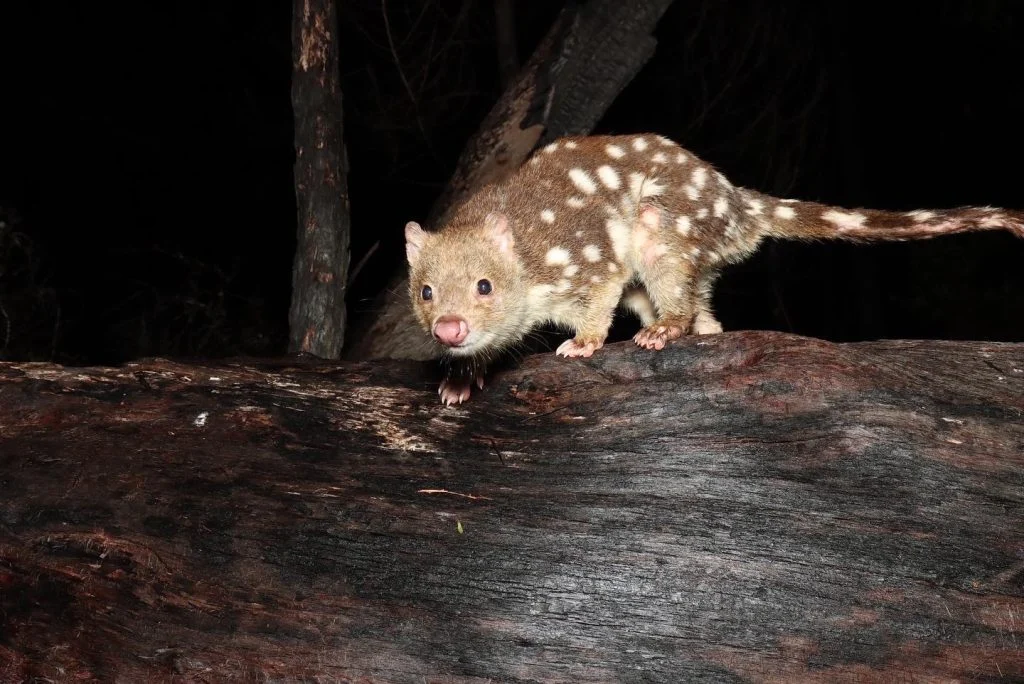
Her Tasmania reserves support swift parrots, wedge-tailed eagles, grey goshawks, Tasmanian masked owls and eastern quolls. They also hold one of the largest known colonies of the endemic endangered forty-spotted pardalote.
In New South Wales, Steve Haslam’s Quoll Headquarters is also a member property. He credited the Wildlife Land Trust team with supporting the sanctuary through both big and small projects over many years.
Haslam said the trust was the first conservation organisation to recognise Quoll Headquarters as a wildlife sanctuary. Other organisations recognised the site later.
The source material also named Babbler Cottage and Lomandra in Queensland, and Esperance Wildlife Sanctuary in Western Australia, as member properties. Those examples show the programme’s reach across several states and habitat types.
Australia is home to unique biodiversity, and Bartels argued private landowners can play a direct role in protecting it. She said the Wildlife Land Trust brings together Australians with a shared concern for nature.
Related Articles
Related: Bluey range