

French Designer’s Legacy Comes to Sydney
Jean-Claude Duboys, a renowned French designer, will be showcased in Australia for the first time at Design Show Australia 2026. The event is scheduled at ICC Sydney from 11th to 13th June 2026.
The Friends of Jean-Claude Duboys Association, alongside his family, have worked diligently to introduce Australian audiences to Duboys’ work, celebrated for its clarity, intelligence, and lightness.
Duboys graduated first in his class from the École Nationale Supérieure des Arts Décoratifs (ENSAD) in Paris in 1962. He embarked on a career that included substantial projects like Maison de la Radio in Paris and design studies for the Israeli ocean liner Shalom.
His works were displayed in esteemed museums such as the Musée des Arts Décoratifs and the Beaubourg Museum, both located in Paris. Notable ENSAD alumni include Auguste Rodin and Philippe Stark.
Jean-Claude Duboys belonged to a generation of French designers focused on precision rather than spectacle. His approach to furniture and lighting emphasised balance, economy of means, and a deep understanding of use.
The Australian exhibition is a culmination of years of dedication by Duboys’ family and the association to preserve his legacy, which includes safeguarding archives, drawings, and original works.
Family’s Role in Preservation
Patrick Duboys, Jean-Claude’s nephew, expressed the significance of this Australian presentation. He remarked, “To present Jean-Claude Duboys in Australia for the first time is profoundly meaningful for our family.”
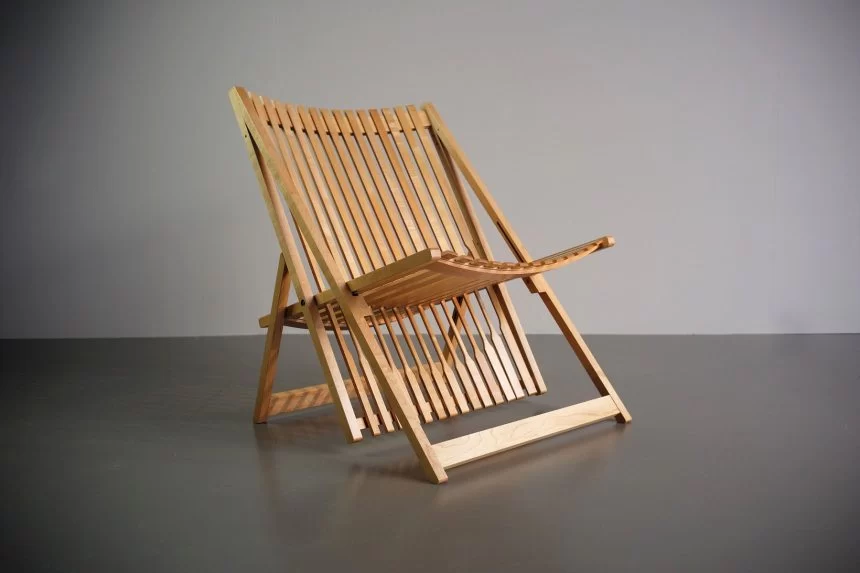
The Programme A Lounge Chair (1978) is a standout piece at the exhibition. Its measured geometry and material restraint highlight Duboys’ design philosophy.
Duboys’ work resonates with modern design priorities such as sustainability and adaptability, making his Australian debut both timely and significant.
Visitors to ICC Sydney can view Duboys’ creations at stand #2206, experiencing his vision of innovative, elegant, and functional furniture design.
Patrick Duboys’ long-standing commitment to his uncle’s work returns to Sydney, a city where he once lived, while the family’s connection to Melbourne extends the exhibition’s significance.
Last updated: 29 June 2026, 11:52 am